
MiFinity Casinos in New Zealand: Availability and Terms
 Available in US
Public payment listings may differ from account-specific deposit and withdrawal options, so compare availability and terms before making a decision.

Table of Contents
- Check Whether MiFinity Is Available for Your NZ Account
- How to Verify That an Online Casino Accepts MiFinity
- Before You Deposit: Fees, Checks and Refunds
- What Happens Between an Online Casino Deposit and Payout
- Compare MiFinity Casino Options by Their Withdrawal Terms
- Using a MiFinity Casino in New Zealand: Read the Bonus Conditions
- MiFinity Vouchers and the Difference Between Deposits and Withdrawals
- Assessing MiFinity Casinos Without Relying on a Ranking
- When a Casino Uses a Different Route for Withdrawals
- New Zealand Licensing and What to Check Before You Play
Check Whether MiFinity Is Available for Your NZ Account
A casino can display MiFinity on a payments page without making it available to every New Zealand player. The page may describe payment methods offered somewhere on the site, while the options shown to you depend on your account and location. Even when MiFinity appears as a deposit method, that alone does not establish that it is available to your NZ account or can be used for withdrawals.
Treat a general payment logo or list as an indication to investigate, not confirmation. A specialist casino review notes that payment availability for New Zealand accounts can differ from availability for deposits and withdrawals. That distinction matters: seeing MiFinity mentioned on a casino’s public pages does not tell you which functions are enabled for your particular account.
Check what applies to your account
The most useful starting point is the cashier after you have signed in. Look for MiFinity among the options available to your account, rather than relying only on a general banking page or promotional banner. If the cashier presents separate sections for adding funds and requesting a withdrawal, check each one independently. An option shown for deposits does not automatically appear for withdrawals.
If you plan to use MiFinity at a New Zealand casino, the details behind each option matter. Use these notes to see which listed facts may help guide your choice.
License: Malta Gaming Authority, licence no. MGA/B2C/394/2017 N1 Casino is listed with a Malta Gaming Authority licence, number MGA/B2C/394/2017. You can use this licence detail as one point of reference when considering the casino.
License: Tobique Gaming Commission, licence no. 0000002 Ricky Casino is listed with a Tobique Gaming Commission licence, number 0000002. You can take this licensing information into account when reviewing the casino.
License: Tobique Gaming Commission, licence no. 0000064 Neospin is listed with a Tobique Gaming Commission licence, number 0000064. This gives you a specific licensing detail to consider.
License: 07017519840 · Payout speed: 1-3 business days Zotabet lists a payout speed of 1–3 business days. You can use this stated timeframe as a reference when considering payouts.
License: Malta Gaming Authority, licence no. MGA/B2C/370/2017 Play Grand is listed with a Malta Gaming Authority licence, number MGA/B2C/370/2017. You can factor this licensing detail into your assessment.
Payout speed: 1-3 business days Wintino lists a payout speed of 1–3 business days. This stated timeframe may help you assess whether its payout timing suits you.
License: Tobique Gaming Commission, licence no. 0000091 7Bit Casino is listed with a Tobique Gaming Commission licence, number 0000091. You can consider this licensing information as part of your review.
License: Curaçao Gaming Authority, licence no. OGL/2024/165/0185 BitStarz is listed with a Curaçao Gaming Authority licence, number OGL/2024/165/0185. This provides you with a specific licence detail to check.
Payout speed: 1-3 business days Lamabet lists a payout speed of 1–3 business days. You can use that stated timeframe when considering its payout timing.
Pay attention to whether the information is specific to New Zealand. A payment page may cover several countries, or may not explain whether every listed method is available in every region. If the country setting or account profile affects what appears, make sure your account details are accurate before drawing conclusions from the cashier. Do not assume that a method offered to another player, or mentioned in a review, will necessarily be enabled for you.
A search for a casino that accepts MiFinity can therefore produce a starting point, not a personal confirmation. The practical question is not simply whether the casino has ever listed MiFinity. It is whether the cashier currently offers it to your NZ account, and for which payment action. Those details may be presented separately, so read the labels instead of treating the method name as a blanket promise.
Keep deposit and withdrawal availability separate
It is easy to read “MiFinity accepted” as meaning that money can move both ways. The wording may only refer to deposits. If you are considering a casino that takes MiFinity, check whether its account-specific information also identifies the method as a withdrawal route. If it does not say, do not fill in the gap by assuming that the same option works in reverse.
This distinction can affect your decision before you commit to using a payment method. A deposit route and a payout route are not necessarily identical, and the options displayed for your account are more relevant than a broad claim that a casino supports MiFinity. If the site’s public information and your cashier do not match, give greater weight to what is available to your signed-in account, while asking the casino to clarify any uncertainty.
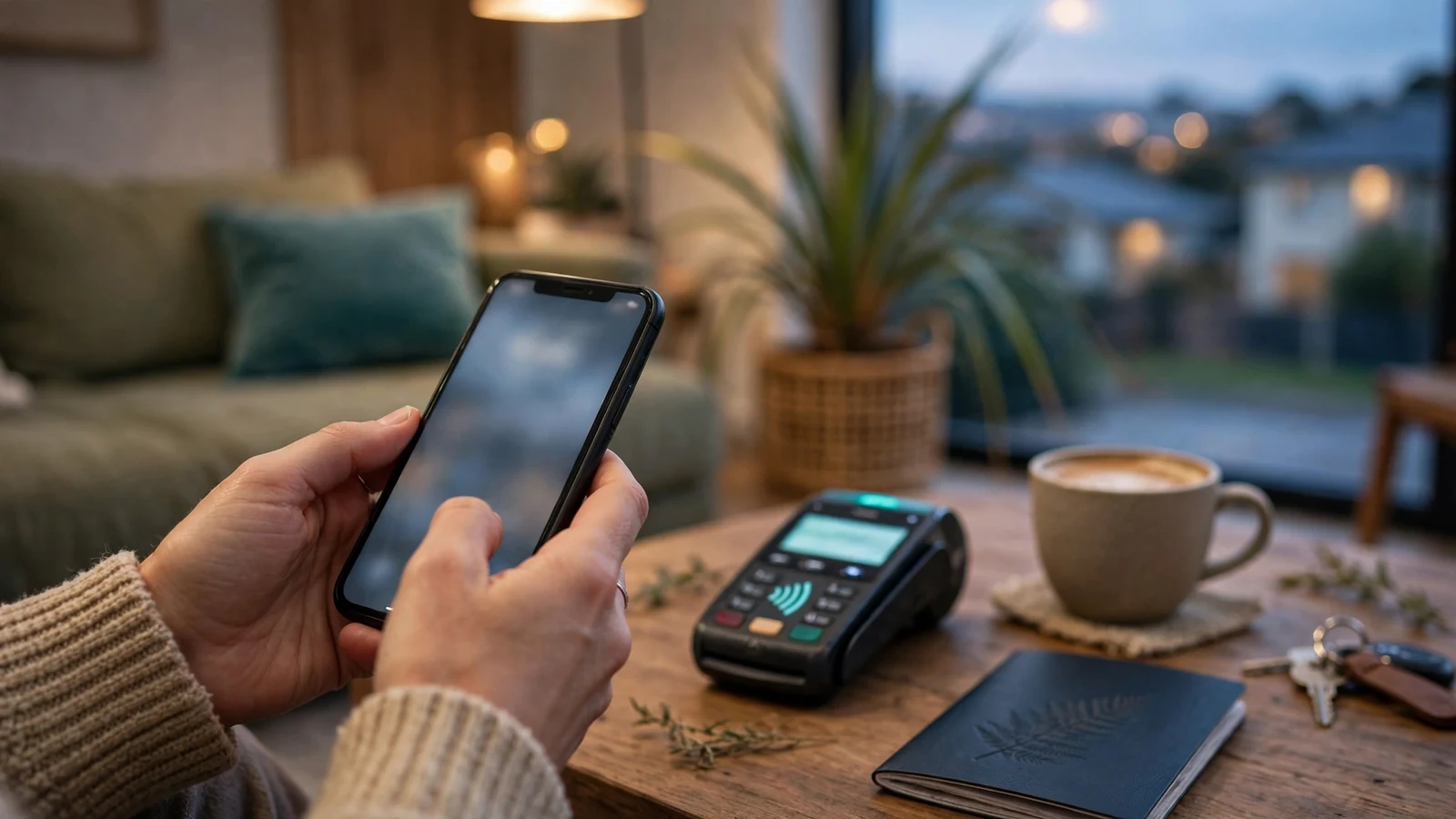

You can also keep a simple record of what you checked: whether MiFinity appeared after signing in, whether the cashier listed it for deposits, and whether it separately listed it for withdrawals. This is not a guarantee that the options will remain unchanged, but it helps you distinguish an account-specific display from a general statement on a website. If the information is unclear, pause rather than treating the appearance of a logo as proof of full availability.
The same care applies when comparing casinos. A page describing a “casino with MiFinity” may not explain whether the method is available to New Zealand accounts or limited to deposits. Before relying on that description, look for account-level confirmation of the function you need. That small distinction can prevent you from choosing a casino on the strength of a payment option that does not match how you intend to use it.
How to Verify That an Online Casino Accepts MiFinity
A MiFinity logo on a casino’s payment page is only a starting point. It does not confirm that the method is enabled for your New Zealand account, or that it can be used on both sides of a transaction. Before relying on it, check what the cashier shows after you sign in and ask support to clarify anything the page leaves uncertain.
- Check the cashier while signed in to see your specific account options.
- Ask customer support for direct clarification on whether MiFinity supports both deposits and withdrawals.
- Verify if the displayed payment methods are specific to New Zealand.
- Rely solely on general payment logos or promotional banners on public pages.
- Assume that a method used for deposits is automatically available for withdrawals.
- Take a broad statement like “MiFinity is accepted” as a personal confirmation.
Check the cashier while signed in
Open the casino’s cashier from your own account and look for MiFinity in the available payment methods. A general payments page may describe options offered somewhere on the site, rather than those currently available to every customer. The signed-in cashier is more relevant, but even its display should be read carefully: a payment method shown for deposits is not automatically available for withdrawals.
Check whether the cashier separates deposit and withdrawal methods, or labels each option by transaction type. If MiFinity appears only under deposits, treat that as evidence of deposit availability, not proof that you can receive a payout through it. If the cashier has no clear withdrawal section, do not infer that the route is supported; ask the casino to confirm.
Also confirm that the cashier is displaying options for New Zealand customers. Look for a country setting or account details that identify your location, and make sure you are not viewing a page intended for another region. Payment options can vary by country and account, so a method listed in a general help article or promotional panel may not match the choices available to you.
Ask support a precise question
Contact customer support before making a decision based on a broad statement such as “MiFinity is accepted.” Ask whether MiFinity is available to New Zealand residents on your account, and whether that answer applies to deposits, withdrawals, or both. If the response refers to “payments” without distinguishing the direction, ask for a direct clarification.


You can also ask support to confirm what you should see in the cashier when signed in from New Zealand. If the method is missing from your account, ask whether that means it is unavailable to you or whether another account-specific condition applies. A clear written response is more useful than an ambiguous general assurance. Keep the reply with your records so you can refer back to the exact wording if the cashier later appears to show something different.
The distinction matters beyond MiFinity. A specialist payment-method review reports Visa, Mastercard, Visa Electron, Skrill, Trustly, Neteller, iDebit and Apple Pay as options for New Zealand players, but a published list of methods does not establish that each one is available to every account or supports withdrawals. Treat such lists as prompts to verify, not as confirmation of your own cashier.
Compare the answer with what is displayed
When support replies, compare its answer with the signed-in cashier rather than relying on one source alone. If the cashier lists MiFinity for deposits but support says it is also available for withdrawals, ask where the withdrawal option should appear and whether the answer applies to New Zealand accounts. If the two sources conflict, pause and request clarification before treating the method as confirmed.
Be precise about the terms used. “Accepted” may mean that a casino can process a deposit, while “available for withdrawals” is a separate claim. Likewise, “available in New Zealand” may refer to the site generally rather than to the options enabled on your account. Ask support to address your country, your account, and each transaction direction explicitly.
Payment options can vary by country and account, so a method listed in a general help article may not match the choices available to you.
Payment pages and support information can change. Recheck the cashier and the casino’s current written guidance when you are assessing the method, rather than assuming that an older review or an earlier answer still applies. The point is not simply to find MiFinity named somewhere on the site; it is to establish exactly what the casino currently permits for your New Zealand account.
Before You Deposit: Fees, Checks and Refunds
Before funding an account, work out what could happen if a payment is reversed, rejected or left unused. A deposit and a refund are different processes: a casino may return funds after a payment issue, but that does not mean the provider will return the full amount without a charge. Check the casino’s payment terms and the provider’s current fee information before you approve a MiFinity casino deposit.
A specialist review reports that a provider refund can carry a NZD 12 fee. Treat this as a reported possibility, not as a confirmed MiFinity charge or a fee that applies to every refund. The amount and the circumstances may depend on the provider’s current terms and the reason for the refund. If the cashier does not explain what happens after a failed or reversed payment, ask support to clarify whether the casino initiates the return and whether the provider may deduct a fee.
Check the cost before confirming
Review the amount that will leave your MiFinity account, any currency conversion shown, and whether the casino displays a separate charge. If the payment is declined or needs to be returned, keep the transaction record and any message explaining the outcome. These details can help you ask the casino or provider to trace the payment without making a second deposit while the first one is unresolved.

Do not assume a refund is automatic simply because a deposit did not appear in your casino balance. Contact the casino through its official support channel and ask whether the transaction is pending, rejected or being returned. If the casino says the provider must handle the next step, request the relevant transaction reference. Avoid sending a complete payment PIN or private account credentials in a chat or email. Standard identity checks should not require your online banking password, card security code or one-time login code.
Understand what can delay a later withdrawal
A deposit does not mean winnings can be transferred out immediately. The casino has to approve a withdrawal before the external payment transfer begins. A specialist review notes that identity verification, payment checks and bonus conditions can add time before that approval. In practice, the casino’s review and the provider’s transfer are separate stages, so a payment can still be under casino review even when no transfer has started.
Have proof of identity ready for the withdrawal process. The casino may need to confirm that the account belongs to you and review the payment activity before releasing funds. Check which documents it accepts and how to submit them securely. If you are asked to provide information that would give someone access to your banking or payment account, stop and confirm the request through the casino’s official support channel.
Attention Identity verification, payment checks and bonus conditions can add time before a withdrawal is approved by the casino.
Bonus terms are another possible source of delay or changed withdrawal eligibility. If you accept an offer, read its conditions before playing and before expecting bonus-related winnings to be available. The casino may need to confirm that the applicable terms have been met as part of its review. Keep a copy of the offer conditions that applied when you accepted it, rather than relying on a later summary.
Keep a clear record
Save the deposit confirmation, the amount shown in the cashier, any provider receipt and relevant support replies. If you decide not to continue after a payment problem, do not make repeated deposits to test whether the route has started working. First establish the status of the original transaction and whether a refund is being arranged.
Before you proceed, make sure you can identify the casino’s process for payment disputes, the provider’s route for refund questions and the documents required for a withdrawal. If any fee or review step is unclear, get an answer before sending funds. That small pause can help you avoid confusing a pending payment, a refund and a casino-approved withdrawal as if they were the same transaction.
What Happens Between an Online Casino Deposit and Payout
A deposit and a payout are separate stages, even when you use the same payment account for both. Money first moves from your payment method into the casino balance. When you request a withdrawal, the casino processes that request and releases funds through a payout route. Only after release does the external transfer begin. The route and currency used at that stage can affect what reaches you.
This matters when you pay through a digital wallet such as MiFinity. Seeing a balance in NZD does not, by itself, tell you how a later withdrawal will be handled. The balance is the casino’s display of what you can use there; settlement depends on the casino’s payout arrangements and the payment route involved.

From casino release to your account
Once a casino has released a withdrawal, the next step depends on the payment type. A specialist review describes digital wallets and cryptocurrencies as routes that may transfer funds rapidly after release. A bank transfer provides a direct route to a New Zealand bank account. Card payouts, by contrast, depend on whether the card issuer and payment network support them.
Those distinctions are about the transfer after the casino has acted, not a promise that the entire withdrawal will be rapid. The casino’s release and the provider’s transfer are separate parts of the process. A payment route that can move funds quickly once released does not establish how long the casino will take to process a request, or whether that route is available for your account.
For that reason, treat any displayed status as describing a particular stage. A casino may show a request as pending before release; that is not the same as the external payment being underway. After release, the payment provider or receiving bank may still need to process the transfer. If you are following a withdrawal, check which stage the casino says it has reached rather than assuming that a change in the casino balance means the money has arrived.

Why an NZD balance may not mean an NZD payout
Currency can change between the casino balance and the amount you receive. A specialist review notes that a balance shown in NZD does not guarantee settlement in NZD. If the casino or payment route converts the funds, an exchange rate or margin may affect the final amount.
The practical point is to distinguish the currency used to display your balance from the currency used to send and receive a withdrawal. Check the casino’s stated payout currency and the terms for the route you intend to use. If the payment is converted, the amount shown before conversion may not match the amount credited to your account.
A useful way to read the process is as a chain: the casino records your balance, processes and releases a withdrawal, and the selected payment route then transfers the funds. Currency conversion can occur along that chain. The label “NZD” on the casino screen does not settle where conversion happens or what rate applies, so do not treat it as a guarantee of the amount that will arrive.

When comparing an online casino that lists MiFinity with one that shows another payment route, focus on the payout stage as well as the deposit stage. A route’s appearance in the deposit area does not explain how a withdrawal will travel, and the options can differ by payment type. The important details are the route used after release, whether that route supports your receiving account, and the currency in which the transfer is settled.
Keep a record of the withdrawal status and the amount and currency stated when it is released. If the amount credited differs from what you expected, those details help you identify whether the difference arose before release or during the external transfer. That is more useful than relying on the casino balance alone as a guide to the final payout.
Compare MiFinity Casino Options by Their Withdrawal Terms
When comparing casinos that may offer MiFinity, look beyond whether the method appears in a payment list. The withdrawal rules determine how much you can request, whether a request may be split, and what checks could affect its progress. Read the terms for withdrawals specifically: deposit limits do not tell you what you can cash out.
A specialist casino review reports that casinos and payment providers may set withdrawal limits per transaction or across daily, weekly or monthly periods. It also notes that larger transactions may receive additional review. These terms can change, so treat a review as a prompt to check the current cashier and written payment rules, not as confirmation of what will apply to your account.
Compare the limits as a set
Check whether the casino sets a minimum and maximum for each withdrawal, then look for separate cumulative limits over time. A per-transaction cap and a weekly cap work differently: the first may mean submitting more than one request, while the second can restrict the total you request within that period. If the wording does not make clear how limits interact, ask support to explain before you plan around a particular payout.
Withdrawal limits
A casino may set withdrawal limits per transaction or across daily, weekly, or monthly periods. Larger transactions may also receive additional review.
Also check whether the payment provider applies its own limits. A casino’s stated maximum does not necessarily mean the full amount can be transferred in one transaction through the selected method. Ask whether the casino limit or provider limit controls the request, and whether either can change after account checks.
Avoid comparing casinos by a single headline figure. The useful comparison is the full set of conditions: the smallest request accepted, the largest single request, any cumulative cap, and the period over which that cap applies. If terms are vague or scattered across separate pages, save the relevant wording and seek a written explanation.
Ask what can trigger extra review
The possibility of additional review for larger transactions matters when you are comparing payout terms. Before relying on a casino’s published limit, ask whether a request near that limit is treated differently, what information may be requested, and whether the review affects only the casino’s approval or also the provider transfer. Do not assume that a listed maximum is a promise that every request at that level will follow the same process.
A clear answer should distinguish the amount you may request from the checks that may apply to it. If support cannot explain how the limits work, or directs you only to a general payment page, take that uncertainty into account rather than assuming the most favourable interpretation.

Keep a record of the applicable terms when you make your comparison. This is especially useful if the cashier, help pages and support give different descriptions. Ask which terms govern your account and retain the reply. You are comparing the rules that would apply to your own withdrawals, not trying to identify a casino with the largest advertised cap.
A careful comparison of MiFinity casino options is therefore less about a ranking and more about whether the withdrawal limits are understandable, whether provider restrictions are accounted for, and whether larger requests may receive added scrutiny. Those details help you judge whether the stated terms fit the amount and timing you have in mind without treating a maximum as guaranteed.
Using a MiFinity Casino in New Zealand: Read the Bonus Conditions
Using MiFinity to fund an account does not determine how a casino treats bonus-related winnings. Those terms are set by the promotion, and a specialist casino review describes conditions that may include wagering requirements, game contribution rules, maximum-bet restrictions, expiry dates and a maximum cashout. Check the current offer’s own terms before accepting it: a brief banner may not show the restrictions that affect whether winnings can be withdrawn.
A wagering requirement means that bonus funds, or funds connected with a bonus, must be wagered according to the offer’s rules before the casino will treat related winnings as eligible for withdrawal. Read what the requirement applies to and how the casino counts qualifying play. If the wording is unclear about whether it covers the bonus, the deposit, or another amount, ask the casino to explain in writing before you opt in. Do not assume that placing bets automatically satisfies every condition.
Bonus terms checklist
- Check the wagering requirements for bonus funds.
- Verify which games contribute to the wagering requirement.
- Confirm any maximum-bet restrictions while the bonus is active.
- Note the expiry date for using the bonus or its winnings.
- Identify if there is a maximum cashout limit on bonus winnings.
Game contribution rules affect how different games count towards wagering. A game can contribute less than another, or may not count at all, under a particular offer. That can make progress slower than you expect if you choose games based only on preference. Check the eligible games and their stated contributions, and pay attention to any exclusions. If you switch games, the amount of progress credited may change under the promotion’s rules.
A maximum-bet restriction can also matter while a bonus is active. If the terms set a ceiling on bets, exceeding it may affect eligibility for bonus-related winnings. The relevant rule may apply only during a defined part of the offer, so read when it starts and ends rather than relying on a general description. If you are unsure whether a particular bet falls within the limit, pause and get clarification before continuing.
Expiry dates are another practical condition. An offer may require you to use the bonus or complete its wagering conditions within a stated period. Once the relevant time has passed, the casino may no longer treat the bonus or associated winnings as eligible under that promotion. Check the start point as well as the expiry: accepting, activating or receiving an offer could affect how the casino calculates the time available.
Finally, look for a maximum cashout condition. This can cap the amount of bonus-related winnings that the promotion allows you to withdraw, even if your displayed balance is higher. Identify whether the cap applies to winnings from the bonus and what happens to any amount above it. Keep a copy of the offer terms as they appear when you accept, particularly if the promotion is later changed or removed.

For anyone comparing MiFinity casinos in New Zealand, separate the payment method from the promotion. MiFinity describes how you may fund an account; it does not override the bonus rules. If the terms leave a point unresolved, do not rely on an assumption about how the casino will calculate your winnings.
MiFinity Vouchers and the Difference Between Deposits and Withdrawals
A prepaid voucher can be accepted when you add money to a casino account without being able to receive money from that casino. Depositing and withdrawing are separate functions: a payment option shown for one does not prove it is supported for the other.
That distinction matters when you are considering a MiFinity voucher. Do not assume that a casino accepting MiFinity deposits also accepts a voucher as a destination for winnings. A prepaid code used to fund play is not automatically an account that can receive a payout. Check the casino’s stated withdrawal routes and the terms for your own account before relying on the method.
PaysafeCard is a separate payment method, and information about it should not be treated as evidence about MiFinity. A specialist review has reported that some New Zealand casino cashiers accept PaysafeCard deposits, but availability needs to be confirmed for an eligible New Zealand account. That report does not establish that PaysafeCard can receive withdrawals, nor does it confirm that MiFinity vouchers are available or work in the same way.
Payout availability
Do not assume that a prepaid voucher used for deposits can be used to receive your winnings.
If the method you use to deposit cannot receive payouts, the casino may require you to nominate another route. This could mean a separate bank account, digital wallet or cryptocurrency address, depending on the options the casino supports. Before depositing, make sure you can use an available withdrawal method and that its account details belong to you. Otherwise, you could find that your preferred deposit option does not provide a complete route for moving money back out.
Treat the word “voucher” as a description of how funds are supplied, not as a promise about withdrawals. Confirm the exact MiFinity option shown to you, whether it is a voucher or another account-based service, and whether the casino permits that specific option for payouts. A matching brand name on the deposit and withdrawal screens is not enough if the terms distinguish between the two.
Assessing MiFinity Casinos Without Relying on a Ranking
A ranking can help you find casinos to investigate, but it cannot tell you whether the payment terms fit your needs. For a MiFinity casino, read the withdrawal rules alongside the cashier information and focus on what happens when you request a payout.
Start with the limits. A specialist review notes that casinos or payment providers may set caps per transaction, per day, per week or per month. Check which limits apply to the method you intend to use, and whether a request above a stated threshold could be split or face additional review. The rules should make clear whether limits are set by the casino, the provider, or both. If they do not, ask support to clarify before treating the route as suitable.

Next, look for the exact payout route. Do not assume that mentioning MiFinity in a casino’s payment information means it will be used for withdrawals. Find the withdrawal terms and confirm what method the casino says it will use to send approved funds. If the information is unclear, request a direct answer and keep the reply for reference. This is more useful than relying on a badge or a general statement that the casino supports a payment method.
Pay attention to the point at which the casino releases the funds. A specialist review explains that the casino must approve a withdrawal before an external transfer begins. Identity verification, payment checks and bonus conditions can add time before that approval. A stated provider transfer time, therefore, may not cover the full period from submitting a request to receiving funds. Check whether the casino describes its own review stage separately from the provider’s transfer stage.
When comparing options, record the limit structure, the named payout route and what the terms say about approval and review. If a casino gives only a broad claim about fast payouts, without explaining these steps, you have little basis for judging the process. Clear, specific terms make it easier to decide whether a MiFinity casino’s withdrawal arrangements suit you; a prominent ranking alone does not.
When a Casino Uses a Different Route for Withdrawals
A MiFinity option in a casino’s deposit menu does not, by itself, mean you can use MiFinity to receive a payout. A specialist casino review reports that payment availability for New Zealand accounts can differ between deposits and withdrawals, and those options may change. Treat the cashier’s payout route as a separate question from how you funded your account.
Essential distinction
A familiar way to pay in is not necessarily a way to cash out.
If MiFinity is deposit-only, the casino may ask you to nominate another destination for an approved withdrawal. Depending on its rules, that could be a bank account, a digital wallet or a cryptocurrency address. The important point is to find out what the casino accepts before depositing: a route you cannot use or do not want to use can leave you with an unexpected extra step when you request your money.
Check that any alternative destination belongs to you and that you can provide the details the casino requires. The casino must have proof of your identity before it can process a withdrawal. Do not send passwords, complete security codes or one-time login codes as part of standard verification, and do not pay an unrelated fee described as a release or unlocking charge.
Ask support to confirm the exact route for your account, not just which methods appear in a general payment list. If the answer is that MiFinity can fund deposits but cannot receive payouts, ask which alternatives are available to New Zealand customers and what account details or documents are needed. Save the response, along with the relevant cashier information, so you can refer back to the stated terms.
This distinction matters when considering any MiFinity casino: a familiar way to pay in is not necessarily a way to cash out. Decide whether the permitted withdrawal route works for you before you make a deposit. If the casino requires a separate bank account, wallet or cryptocurrency address, make sure you understand that requirement and are comfortable using it.
New Zealand Licensing and What to Check Before You Play
New Zealand’s online casino rules are changing, so a licence claim needs to be understood in context. The Online Casino Gambling Act 2026 took effect on 1 May 2026, establishing the country’s first domestic licensing system for online casino gaming. The full regime is not expected to be operational until 2027.

The transition matters when you assess a casino. Operators that were already serving people in New Zealand before the Act took effect may continue until 1 December 2026 under transitional provisions. That does not, by itself, mean they already hold a New Zealand online casino licence. Before the new law, offshore online casino services were not licensed or supervised by a New Zealand regulator.
The Department of Internal Affairs is New Zealand’s primary gambling regulator and oversees the online casino licensing framework. The Gambling Commission has a distinct role: it considers and determines casino licence applications, issues licences, and approves changes to licence conditions. In other words, the Department’s oversight of the framework should not be confused with the Commission’s decisions on individual applications and licence terms.
When assessing a casino, look for a clear explanation of its status under the new regime and check whether a claim refers to an existing licence, an application, or permission to continue during the transition. Those are not interchangeable. A foreign licence is also not the same as a New Zealand licence. If a casino gives only a general statement about regulation, treat that as a reason to seek clarification rather than as proof of local authorisation.
For someone considering a MiFinity casino in New Zealand, payment availability and licensing status are separate questions. A working cashier does not establish that the operator holds a New Zealand licence, and a licensing statement does not confirm that a payment method is available to your account. Check each point directly, using the casino’s published terms and the relevant regulator’s information. During this changing period, avoid relying on old descriptions of New Zealand’s rules; the legal position depends on the transition and the operator’s status under it.
Created by the ”Casino Expert NZ” editorial team.