Roulette Rules for New Zealand Players: Wheel Basics
 Available in US
The guide explains wheel variants, table bets, zero rules, payouts and how a round moves from betting to settlement.
Table of Contents
- The Roulette Wheel: European, American and French Rules
- What Roulette Rules Mean for Players in New Zealand
- Reading the Roulette Table and Following a Spin
- Roulette Odds: What the House Edge Tells You
- How Double-Zero Roulette Works
- Inside and Outside Bets on a Roulette Layout
- A Roulette Round, from Betting to Settlement
- Check the Table Minimum Before You Bet
- Roulette Payouts and the French Zero Rules
- Roulette Strategy: Keep Each Spin in Perspective
The Roulette Wheel: European, American and French Rules
Roulette begins with a wheel divided into numbered pockets and a ball that settles into one of them. The wheel variant matters because it determines which pockets are possible and how zero is treated. European, American and French roulette are closely related, but their rules are not interchangeable.
European Roulette: one zero
A European wheel has 37 pockets: the numbered pockets from 1 to 36 and a single pocket marked 0. The numbers are coloured red or black, while zero is green. When the ball comes to rest, the result is the pocket containing it. The presence of just one zero is a defining feature of this version.
For a player, the practical point is that a European wheel has one green pocket to account for. Zero is not a red or black number, nor is it odd or even. A bet on one of those opposing categories therefore does not win when zero is the result. The same principle applies to other bets whose conditions exclude zero: the ball landing there can change whether the wager wins or loses.
European Roulette is a common reference point when people describe basic roulette rules, but the name alone does not tell you every condition at a particular table. The displayed game rules matter, especially if the game is labelled as a special variation. Check which wheel is shown and what the table says about zero before you place a bet.
American Roulette: an extra green pocket
American Roulette has 38 pockets. It includes the single-zero pocket found on a European wheel and adds a separate double-zero pocket, marked 00. Both zero pockets are green; the remaining pockets carry the numbered results. This additional pocket changes the set of possible outcomes, so the American wheel does not follow the same result distribution as a single-zero wheel.
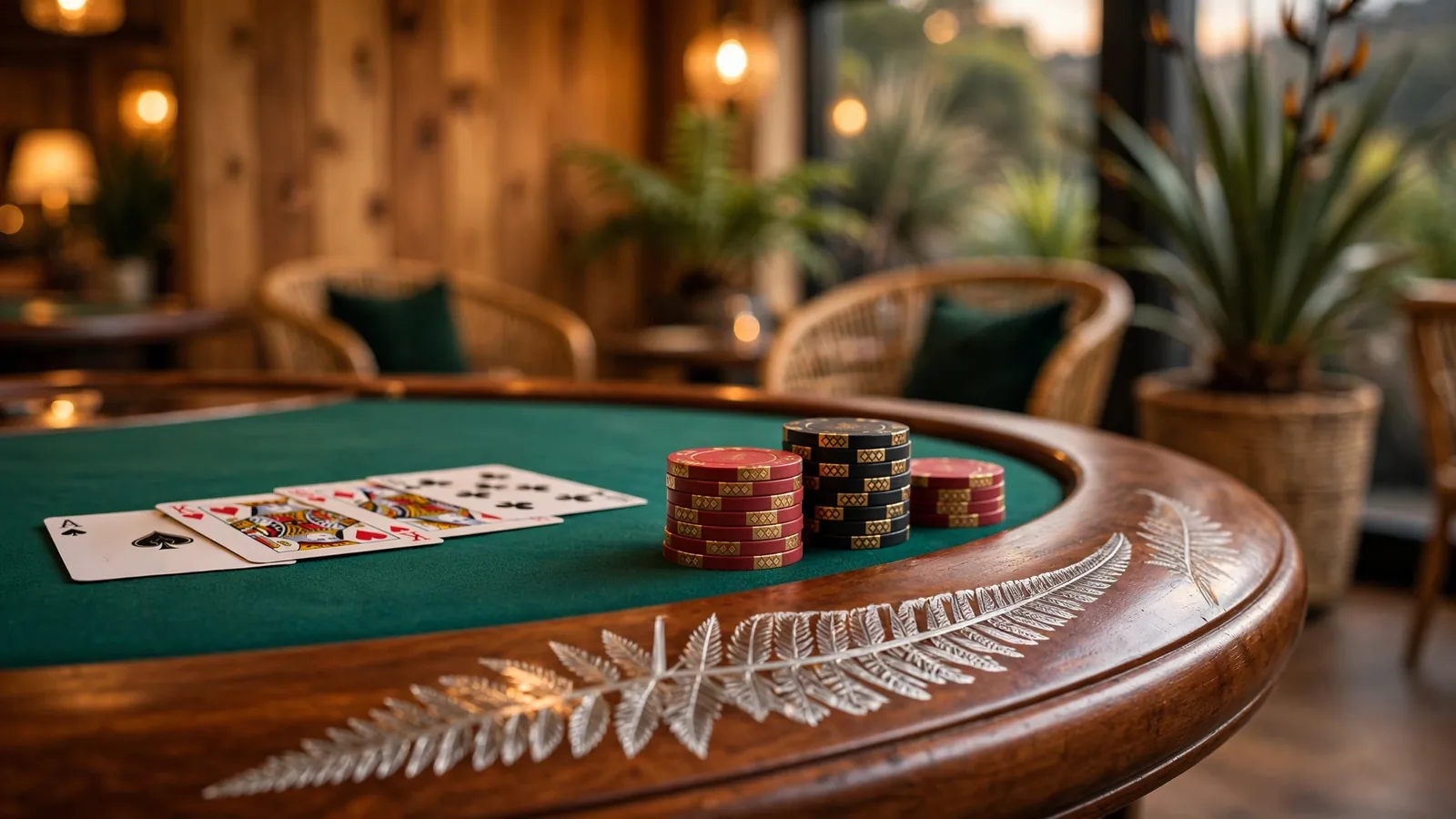
The distinction is easy to miss if you are looking at a small screen or moving between games. Look for the 00 as well as the 0. If both appear on the wheel, you are viewing the American layout. A wager that loses on zero will also lose on double zero when its conditions do not include either result. The table’s rules determine how each type of bet is settled, so do not assume that a rule from another roulette game carries over.
The extra pocket is not merely a different label or decoration. It is part of the wheel, and the ball can land in it. That is why identifying the variant before playing is a useful first step, even if the betting controls and general appearance seem familiar.
French Roulette: a single-zero wheel with additional rules
French Roulette has the same single-zero arrangement as European Roulette: one green zero alongside the numbered pockets. Its distinctive feature is not an extra pocket, but special treatment for certain bets when zero appears. La Partage and En Prison are the relevant rules.
These rules apply only to even-money outside bets, such as a wager on red or black, odd or even, or a low or high group. “Even-money” describes a bet that pays an amount equal to the stake when it wins. The zero does not become part of either side of these choices. Instead, La Partage or En Prison changes what happens to an eligible wager when zero lands.
With La Partage, half of the stake on an eligible even-money bet is returned to you and the other half is taken. With En Prison, the stake is held for the next spin rather than settled as a normal loss immediately. If that following spin wins for the original bet, your stake is returned without extra winnings; if it loses, the stake is collected. These conditions are limited: they do not apply to every kind of wager, and they are triggered by zero.
French Roulette features special rules for even-money outside bets when zero appears: La Partage or En Prison. These rules can reduce the house edge on eligible bets to 1.35%.
French Roulette therefore should not be identified solely by the wheel’s appearance. Its single-zero layout resembles the European wheel, but the table rules may provide a different outcome for eligible even-money bets after zero. Read the rules attached to the specific game rather than relying only on its title.
The French zero rules can reduce the house edge on eligible even-money bets; when La Partage or En Prison applies, the French Roulette house edge is 1.35%. This does not mean zero is ignored or that every bet receives a partial return. The protection concerns only the specified even-money outside bets and only when the ball lands in the zero pocket.
Before you play, identify the wheel and the zero rule separately. One green pocket points to a single-zero game, while a second green pocket marked 00 identifies the American layout. A French game also has a single zero, but may apply La Partage or En Prison to qualifying bets. Knowing those differences gives you a sound starting point for understanding the game without assuming that familiar-looking wheels settle every wager in the same way.
What Roulette Rules Mean for Players in New Zealand
When you’re checking roulette rules for New Zealand in 2026, it helps to review the available operator information before choosing where to play. Use these details as a starting point and check each operator’s current rules for yourself.
License: Malta Gaming Authority, licence no. MGA/B2C/394/2017 You can note that N1 Casino lists a Malta Gaming Authority licence, no. MGA/B2C/394/2017.
License: Tobique Gaming Commission, licence no. 0000002 Ricky Casino lists a Tobique Gaming Commission licence, no. 0000002, for your reference.
License: Tobique Gaming Commission, licence no. 0000064 Neospin lists a Tobique Gaming Commission licence, no. 0000064.
License: 07017519840 · Payout speed: 1-3 business days Zotabet lists licence identifier 07017519840 and a payout speed of 1–3 business days.
License: Malta Gaming Authority, licence no. MGA/B2C/370/2017 Play Grand lists a Malta Gaming Authority licence, no. MGA/B2C/370/2017.
Payout speed: 1-3 business days Wintino lists a payout speed of 1–3 business days.
License: Tobique Gaming Commission, licence no. 0000091 7Bit Casino lists a Tobique Gaming Commission licence, no. 0000091.
License: Curaçao Gaming Authority, licence no. OGL/2024/165/0185 BitStarz lists a Curaçao Gaming Authority licence, no. OGL/2024/165/0185.
Payout speed: 1-3 business days Lamabet lists a payout speed of 1–3 business days.
The rules for a roulette game describe how a table operates: which bets are available, how a result is settled and what happens when a particular pocket is hit. Those rules are separate from the legal framework governing the businesses that offer online casino games. A familiar set of game rules does not, by itself, tell you whether an online casino is licensed to operate in New Zealand.
The Department of Internal Affairs is New Zealand’s primary gambling regulator and oversees the framework for online casino licensing. The Gambling Commission has a distinct role: it considers casino licensing applications, issues online casino licences and approves changes to licence conditions. These responsibilities concern the regulation of providers, rather than the rules used to play a roulette round.
A changing licensing framework
The Online Casino Gambling Act 2026 came into force on 1 May 2026, establishing New Zealand’s first domestic licensing system for online casino gambling. The framework is being introduced in stages. During the transition, providers that were already offering services to people in New Zealand before the Act took effect may continue operating until 1 December 2026, subject to the Act’s transitional provisions.
That transitional permission is limited. Providers that have not applied for a licence must stop offering online casino gambling in New Zealand by 1 December 2026. The full licensing regime is not expected to be fully operational until 2027, and unlicensed operation is expected to become an offence around the middle of that year. The transition therefore matters when you assess what a provider may do and when; it does not alter the way a roulette game itself is played.

The legal position has also changed over time. The Gambling Act 2003 does not permit online casinos to be based in New Zealand, and domestic online casinos are prohibited. Before the 2026 Act took effect, offshore online casino services were not licensed or supervised by a New Zealand regulator. Customers wagering through an offshore website in that period had no domestic government recourse. The new framework creates a route for domestic licensing, but its staged introduction means you should not assume that every site available to New Zealand residents already holds a local licence.
What to check as a player
When you look at a roulette table, the displayed game rules tell you about that game. Licensing information is a separate matter. In the transition period, read a provider’s statements carefully and distinguish a claim about its game offering from information about its regulatory status. Do not treat a roulette title, familiar layout or clear rules as evidence of a New Zealand licence.
The Act also points towards stricter age and identity verification for licensed operators. Verification is part of the provider’s compliance obligations; it does not change the probabilities of roulette or make a wager risk-free. A real-money bet can still lose, regardless of the provider’s licensing position.
If a site offers a bonus, review its conditions before accepting it. Bonus money must be wagered 50X within 30 days, while winnings from free spins must be wagered 50 times within 7 days. A withdrawal request voids active or pending bonuses. These conditions affect how promotional funds and related winnings can be used; they are not roulette rules and should not be confused with licensing terms.
For a New Zealand player in 2026, the practical distinction is straightforward: game rules explain the play at the table, while the licensing framework governs who may offer online casino gambling and under what conditions. Keeping those questions separate helps you understand what a roulette table promises—and what it does not establish about the provider behind it.
Reading the Roulette Table and Following a Spin
A roulette table shows betting choices on a flat layout, while the wheel arranges the numbered pockets in a different order. Keeping those two arrangements separate helps you understand what a bet refers to and where you need to place it. The table is not a picture of the wheel: neighbouring numbers on the cloth are not necessarily neighbours on the rim.
On a conventional layout, the numbered betting area is arranged as a grid. Each printed number marks a place where a chip can be set for a bet on that number. The surrounding spaces and marked sections provide other ways to select outcomes, such as groups of numbers or colours. Exact labels and presentation can differ between tables, so take a moment to read the layout in front of you rather than assuming every version looks identical.

A chip’s position on the cloth communicates the selection. For a bet on one number, it sits within that number’s box. For a selection involving more than one number, it is placed on a line or junction shared by the relevant boxes. The placement identifies which numbers the wager covers; it does not indicate a position on the wheel. If a chip is close to a boundary and you are unsure how the table will read it, ask before betting or use the interface’s selection controls to check what is marked.
The main layout also includes labelled areas for broader selections. Those areas make it possible to choose a group without placing a separate chip on each number. Read the wording carefully: a label describes the selection attached to that area, not a prediction about where the ball will land. A digital table may highlight selected numbers or display a bet summary, which can help you confirm that the intended area was chosen.
Some tables also offer called bets. These are not simply bets placed on a named section of the cloth. Called bets refer to groups formed by the positions of numbers around the wheel, so their membership follows the wheel’s arrangement rather than the table grid. This distinction matters when a dealer announces a call or a game interface presents a named wheel-based selection. The numbers associated with it may appear scattered across the cloth because the table and wheel organise numbers differently.
If you hear a call, do not infer its coverage from where one number happens to sit on the table. Check which numbers the call includes and how the table accepts it. At a physical table, the dealer can clarify a call and place the chips as required. Online, look for the selection details before confirming the wager; a label alone may not make its coverage obvious. If the game does not explain the selection clearly, pause rather than relying on a guess.
Understanding the Table
The roulette table grid and the wheel arrangement are different; called bets follow the wheel’s order, not the table’s layout.
This is also why two chips placed in nearby table areas do not necessarily represent neighbouring wheel positions. Conversely, a called bet can link wheel neighbours that are separated across the printed grid. The cloth is designed to make betting selections accessible; the wheel order is a separate reference used for wheel-based calls.
Before confirming any selection, check the table’s labels, the chip position and any displayed summary. Make sure the chosen numbers or group match what you intended, especially when using a call rather than selecting directly from the printed layout. That simple check can prevent a misunderstanding about what your wager covers. Once you can tell the table’s grid apart from the wheel’s order, the layout becomes easier to read without treating every marked area as the same kind of bet.
Roulette Odds: What the House Edge Tells You
The house edge is a way to compare the mathematical cost of different roulette versions. It describes the casino’s theoretical advantage over repeated play, not the amount it takes from every individual bet. A single result can differ sharply from that long-run measure, so the figure does not predict what will happen in a particular session.
On a European table, the wheel has 37 pockets, including one zero, and the house edge is 2.70%. American roulette has 38 pockets, with both a single zero and a double zero; its house edge is 5.26%. The additional pocket changes the balance behind the game: the standard winning payouts do not rise to compensate for it, so the mathematical advantage for the house is greater.

That distinction matters when you compare roulette rules and odds. A payout printed for a winning bet tells you what that bet returns when it succeeds. The house edge takes account of both the possible results and the payouts, giving a broader measure of the game’s structure. A bet can offer a substantial payout when it wins and still sit within a game with a house advantage.
A specialist review reports payout percentages of 97.30% for European roulette and 94.70% for American roulette. These are reported theoretical figures, not a promise that you will receive that share of your own money back. They align with the difference in house edge: European roulette’s lower edge corresponds to the higher reported payout percentage, while American roulette’s higher edge corresponds to the lower one. Treat the payout figures as comparisons between the versions, rather than as a forecast for a short run of bets.
For the same reason, a table’s headline payout should not be read in isolation. Check which roulette version is being offered, then consider its house edge alongside the payout information. European roulette normally carries a 2.70% house edge; American roulette’s stated edge is higher. The difference is not a change in how a winning bet is settled, but in the underlying chance structure and how that structure relates to the standard payouts.
These percentages are useful for comparing game conditions, not for choosing a bet that cannot lose. The lower house edge does not ensure that a European roulette session will finish ahead, and the higher figure does not mean that an American roulette bet must lose. Each figure describes a theoretical advantage across repeated play, while your result depends on the actual outcomes you encounter.
37 pockets with a single zero. The house edge is 2.70%.
38 pockets including a double zero (00). The house edge is 5.26%.
Single-zero wheel that may apply La Partage or En Prison rules to even-money bets.
If you are deciding between the two, the single-zero European version has the more favourable figures in this comparison. That is a mathematical distinction, not a guarantee of better results for you. Set a limit you can afford before playing, and do not treat payout percentages as money you are certain to recover.
How Double-Zero Roulette Works
American Roulette has thirty-eight pockets: numbered pockets from 1 to 36, a single zero marked 0, and a double zero marked 00. The two zero pockets are distinct outcomes. If the ball settles in 0, that is not the same result as it settling in 00, and a bet that depends on the exact pocket must match the one where the ball stops.
The extra pocket changes what you need to keep in mind while playing. A selection that covers numbered results does not automatically include either zero, and choosing 0 does not cover 00. Before placing a bet, check which outcomes it includes and whether the table is American Roulette. The 00 symbol can be easy to overlook if you are used to a single-zero wheel, but it is part of this variant’s layout and a possible result on every spin.
What the two zeroes mean for a bet
Think of 0 and 00 as separate spaces rather than two labels for one result. If the ball lands in either one, a bet wins or loses according to the specific outcomes it covers and the table’s stated rules. Do not assume that a selection involving one zero also covers the other. If the wording or markings are unclear, pause and ask for clarification before staking money.
The same care applies when moving between roulette variants. A table with a single zero does not have the same set of possible pockets as an American table with both 0 and 00. Check the wheel or the table label rather than relying on the appearance of a familiar layout. The name of the game and the symbols shown on the table should agree.

A practical check before you play
Before committing a stake, confirm that the table is American Roulette, identify both zero pockets, and read the rules shown for that game. Then make sure the outcome you intend to cover is actually included in your selection. This small check can prevent a misunderstanding, especially if you have switched from another roulette version or are playing on a screen where the symbols are compact.
The double-zero format does not make 00 a special win or a substitute for 0. It is another pocket in the wheel, and the result is determined by where the ball stops. The American wheel’s 38 pockets include both zeroes, giving the game a house edge of 5.26%. That figure describes the game over repeated play; it does not predict the result of an individual spin or tell you what will happen next.
If you are uncertain about a bet’s coverage, do not place it until you understand the table’s display. Keep the distinction between 0 and 00 clear, and treat either as a possible result rather than an exception to the game.
Inside and Outside Bets on a Roulette Layout
A roulette layout is divided into a numbered area and broader betting sections around it. The numbered area is where inside bets are placed; the surrounding sections are used for outside bets. Reading these labels helps you identify what a chip is covering before you place it.
| Part of the layout | What you see | Where the bet goes |
|---|---|---|
| Number grid | Individual numbered spaces arranged in rows and columns | On a single space, or on a line or corner joining spaces |
| Zero space | A separate space marked zero beside the grid | Directly on the zero space |
| Outside sections | Labels for colour, odd or even, and groups of numbers | On the relevant label beyond the numbered grid |
Inside bets: the numbered area
Inside bets use the numbered grid itself. A chip placed in the centre of a numbered space covers that number. You can also position a chip on a boundary between spaces or at a junction where several spaces meet. The placement indicates which numbers are covered, so a chip that slips away from its intended point may not represent the bet you meant to make.
The grid’s lines are useful guides. A chip on a shared boundary covers the spaces on either side; one at a corner covers the spaces that meet there. The exact placement matters, particularly when the table is busy. If you are uncertain whether the chip is on a boundary or in a space, ask the dealer to confirm before betting closes.
The layout may also provide positions for bets covering a row or a group of adjacent numbers. These remain inside bets because the chip is placed on the grid or its edge, rather than on an outside label. Follow the table’s markings and dealer instructions, since the precise position communicates the selection.
Outside bets: the areas around the grid
Outside bets are placed beyond the numbered spaces, on labelled sections that describe a broader group or characteristic. These include colour, odd or even, and divisions of the number layout. You do not place these chips over individual numbered squares: use the corresponding marked area.

Labels make these selections visible, but check that the chip is wholly within the intended section. A chip near a border can be ambiguous, and the dealer may need to clarify or reposition it. Do not assume that a label applies to a different area just because the sections sit close together.
Reading the labels before placing a chip
The layout is a betting surface, not a map of the wheel. A label or position on the table tells you what the table bet covers; it does not show where a number sits around the wheel. This distinction is especially useful when a game offers bets described by wheel positions: their names refer to the wheel, while you still use the table’s designated betting area to place them.
Before committing a chip, trace the selection from its label or grid position and check that it matches your intention. If the layout is unfamiliar, take time to identify the numbered spaces, the zero space and the outside labels. Clear placement helps prevent a misunderstanding about what you chose.
A Roulette Round, from Betting to Settlement
A roulette round follows a set sequence: bets are placed, the dealer starts the spin, betting closes, and the result is settled. Knowing when each stage happens helps you follow the game without confusing an open betting period with a confirmed outcome.
The Sequence of a Round
A roulette round follows a specific order: bets are placed, the dealer starts the spin, betting closes, and the result is settled. Once betting is closed, you cannot add to or move your chips for that round.
While betting is open, you choose where to place your chips on the layout. You can make one bet or combine several, provided the table accepts them. In a live game, the dealer may announce that betting is closing; in an online game, the interface signals when the betting window ends. Once bets are closed, you cannot add to or move them for that round.
The dealer then spins the wheel and releases the ball in the opposite direction. The ball travels around the track before dropping into a numbered pocket. In a digital game, software displays the spin and result, but the round still has a defined betting period followed by settlement.
The winning number and its colour determine which wagers are successful. The dealer, or the game interface, identifies the result and pays winning bets according to the table’s stated terms. Losing chips are collected, and any winning amount is added to the player’s balance or returned as chips. Check that the displayed result and the settlement match before moving on.
A new round begins with a fresh opportunity to place bets. The previous result does not make a different number more or less likely on the next spin: roulette spins are independent. A run of one colour or number does not alter the chance of the next outcome. Treat each round as a separate event, and do not increase a stake simply because earlier spins seemed to point toward a particular result.
If you are unsure whether betting is still open, wait for the game to confirm the next round rather than trying to place a wager after the spin has started. The exact controls differ between live and digital tables, but the essential order remains the same: place bets before the close, let the spin resolve, then review the settlement.

Check the Table Minimum Before You Bet
Before placing a roulette wager, check the minimum shown for the specific table you are about to use. Do not assume that a figure seen on another table, in a game description or in an earlier session applies here. The displayed minimum is the practical starting point for that table; if it is higher than you are comfortable staking, choose another table or leave the game.
Look for the limit information in the table’s information panel or betting interface before you place chips. Confirm that you are reading the minimum for the bet you intend to make, rather than a maximum or a limit applying to a different betting area. If the display is unclear, pause and check the table rules or ask the operator’s support team before committing funds.
A minimum is not a recommended stake, and being able to meet it does not mean the bet fits your budget. Decide what you can afford to lose before you start, then consider whether the table’s stated minimum allows you to stay within that amount. Remember that every real-money roulette bet can lose. Do not borrow or use money needed for bills, food or other essentials to meet a table limit.
Also read any terms attached to a promotional balance before relying on it. Operators may advertise bonuses with eligibility conditions, wagering requirements, expiry terms, game-contribution rules and restrictions on withdrawals. A balance shown in your account may not be available to withdraw immediately, and a bonus may have conditions that affect how it can be used. Check those terms separately from the table minimum.
Attention Always verify the displayed minimum and maximum limits for the specific table you are using. Changing stakes or table types can change these limits without notice.
If the minimum changes or the table switches to a different game, check the displayed limit again before betting. The amount you previously selected may no longer be accepted, and changing a stake without noticing can lead you to risk more than intended. Take a moment to verify the figure and your total planned spend. If either is uncertain, do not place the bet until you have checked.
Roulette Payouts and the French Zero Rules
Roulette payout rules depend on the wheel and any special rule attached to the table. A specialist roulette review lists a payout percentage of 97.30% for European Roulette and 94.70% for American Roulette. These figures describe the share of stakes returned over time, not what you can expect from a particular spin. The same kind of review gives 100/1 roulette a payout range of 92.86% to 96.19%; the exact figure depends on the game’s rules.
French Roulette has a single-zero layout like European Roulette, but may offer La Partage or En Prison. These rules apply only to even-money outside bets, and only when the ball lands on zero. They do not change how other bets are settled.

With La Partage, half of your stake on an eligible bet is returned when zero appears; the other half is collected. So if you backed an even-money outcome, zero does not take the whole stake under this rule. The French Roulette house edge falls to 1.35% when La Partage or En Prison applies.
En Prison handles the same eligible bet differently. After zero, the stake is held for the next spin. If that spin produces a win, your original stake comes back, but you receive no additional winnings. If it loses, the stake is collected. The bet therefore remains unresolved after the zero result until the following spin settles it.
Check the table’s stated rules before placing a bet. French Roulette does not automatically mean that either rule is available, and the treatment of your stake on zero matters most when you are betting on an even-money outside option. A payout percentage is a long-run measure, not a promise that any individual session will return a particular amount.

Roulette Strategy: Keep Each Spin in Perspective
A sensible roulette strategy begins with a clear limit, not a sequence of bets intended to outsmart the wheel. Each spin is independent: the numbers that appeared earlier do not change the probability of any result on the next spin. A run of one colour, a long gap since a number appeared, or a recent loss does not make a different outcome “due”.
Betting systems can organise how you stake, but they cannot change the wheel’s probabilities, remove the house edge or guarantee a win. Increasing a stake after a loss does not make the next spin more likely to repay it. Nor does repeating a winning pattern make future results more predictable. The outcome remains uncertain each time.
Treat roulette rules and strategy as two separate things. Rules explain how a game is played and how bets are settled; a staking plan only determines how you choose to place your money. It cannot turn chance into certainty. If you decide to play, choose an amount you can afford to lose before you start, and do not raise it to recover losses or extend a session.
Every real-money bet can lose, including a bet that seemed sensible after watching earlier spins. Decide in advance when you will stop, and stick to that decision even if the results are disappointing or you feel close to a win. If the planned amount is gone, stop rather than chasing it. If you notice that play is affecting money needed for everyday costs, take a break and seek support.
Keeping each spin in perspective does not mean expecting a particular result. It means recognising that past outcomes offer no reliable signal about the next one, and that no strategy can promise a return. Set your limit while calm, keep it separate from money you need, and do not risk more than you can afford to lose.
Written by the editors at Casino Expert NZ.