Blackjack Odds for New Zealanders: Rules and Risks
 Available in US
See how hand totals, the dealer’s upcard, table rules and payout terms shape blackjack decisions and possible outcomes.

Table of Contents
- How Blackjack Decisions Shape the Odds
- What Perfect Play Can—and Cannot—Change
- The Odds Behind 21, Aces and Card Values
- Why Casino Blackjack Odds Depend on the Table
- Winning Hands, Losing Hands and Runs of Results
- Online Blackjack Odds and New Zealand’s 2026 Licensing Context
- Using a Blackjack Odds Calculator for Hand Scenarios
- Dealer Bust Odds and Your Position in the Hand
- Blackjack Payouts: What a Natural Can Pay
- Side Bets, Deck Count and Online Game Formats
How Blackjack Decisions Shape the Odds
A blackjack decision is made with two things in view: your hand and the dealer’s visible card. Basic strategy is a way to match those details to an action, rather than choosing by instinct or copying what another player does. It can help you make more consistent choices, but it cannot tell you what the next card will be.
The available actions are to hit, stand, double down or split. Hitting asks for another card; standing ends your turn. Doubling down increases your wager in return for taking a further card and then standing. Splitting separates a pair into two hands, when the table permits it. The right choice depends on the situation, not on one action being best in every hand.
A basic strategy chart brings those decisions together. You find the row that matches your hand and the column for the dealer’s upcard; where they meet, the chart indicates an action. Charts may separate hands into hard totals, soft totals and pairs. You do not need to memorise every entry to use one as a reference, but you do need to read the correct row and column. A chart made for different rules may give different guidance.
When you look into blackjack odds for New Zealand in 2026, the game’s rules matter, and so does checking what is known about the casino offering it. Use these entries as a starting point for your own checks.
License: Malta Gaming Authority, licence no. MGA/B2C/394/2017 N1 Casino is listed with a Malta Gaming Authority licence, no. MGA/B2C/394/2017. Check the blackjack rules at the casino before assessing the odds you may encounter.
License: Tobique Gaming Commission, licence no. 0000002 Ricky Casino is listed with a Tobique Gaming Commission licence, no. 0000002. The supplied information does not specify its blackjack rules, so check those before drawing conclusions about the odds.
License: Tobique Gaming Commission, licence no. 0000064 Neospin is listed with a Tobique Gaming Commission licence, no. 0000064. Its blackjack rules are not specified here, so you’ll need to check them to assess the odds.
License: 07017519840 · Payout speed: 1-3 business days Zotabet has the licence identifier 07017519840 and a stated payout speed of 1–3 business days. The supplied details do not describe its blackjack rules.
License: Malta Gaming Authority, licence no. MGA/B2C/370/2017 Play Grand is listed with a Malta Gaming Authority licence, no. MGA/B2C/370/2017. Its blackjack rules are not provided here, so check them when considering the game’s odds.
Payout speed: 1-3 business days Wintino has a stated payout speed of 1–3 business days. No licence or blackjack-rule details are provided here.
License: Tobique Gaming Commission, licence no. 0000091 7Bit Casino is listed with a Tobique Gaming Commission licence, no. 0000091. The supplied information does not specify its blackjack rules.
License: Curaçao Gaming Authority, licence no. OGL/2024/165/0185 BitStarz is listed with a Curaçao Gaming Authority licence, no. OGL/2024/165/0185. Check its blackjack rules directly, as they are not specified in the information provided.
Payout speed: 1-3 business days Lamabet has a stated payout speed of 1–3 business days. The supplied details do not include licence or blackjack-rule information.
The dealer’s upcard matters because it changes the position you are playing from. A card that looks strong for the dealer can make it more important to consider how your hand can improve; a weaker-looking card may change the balance of the decision. That does not mean the dealer’s eventual hand is known. The upcard is information to use, not a promise about what follows.
Your own hand matters just as much. A hand that can improve safely may call for a different choice from one where another card carries greater risk. A pair also presents a choice that does not apply to an ordinary hand: splitting creates two separate decisions to manage. Doubling down is another specific option, not simply a more confident version of hitting. Basic strategy treats these as distinct cases.
When a chart recommends an action that feels uncomfortable, the discomfort is not evidence that the recommendation is wrong. Players often focus on the hand in front of them, while strategy compares the available choices across similar situations. That perspective can make a prescribed hit, stand or split seem counterintuitive. Still, the chart only applies if its assumptions match the game you are playing.
Blackjack variants do not all use the same rules, and those differences can affect both strategy and the house edge. So a chart should not be treated as a universal instruction sheet. Check that it corresponds to the game’s rules before relying on it, and avoid filling gaps by guessing. If a decision depends on a rule you have not confirmed, pause and check the table information.

A chart can also help you review a decision after a hand. Instead of judging the choice solely by whether that hand went your way, look at whether you used the information available at the time. A sensible decision can still be followed by an unfavourable result. Equally, a favourable result does not prove that a risky choice was sound. Keeping those ideas separate helps you assess your play without treating a short outcome as a verdict on the decision.
The practical value of basic strategy is structure: it gives you a consistent method for choosing among the actions available in a particular situation. It does not remove uncertainty or make every hand favourable. If you choose to play, set a budget beforehand and do not chase losses by changing your decisions or increasing your stakes to recover them. A strategy guide is a decision aid, not a reason to spend more than you intended.
What Perfect Play Can—and Cannot—Change
“Perfect play” in blackjack means choosing the action that best fits the hand and the dealer’s position under the rules in use. It does not mean knowing which card will come next, or being able to make the dealer draw a particular card. Blackjack is still a hand-by-hand contest against the dealer: you are trying to finish closer to 21 without going over, but the cards dealt determine what is possible.
That distinction matters when you ask what your odds would be if you played perfectly. The honest answer is that sound decisions can improve how you handle the chances available to you; they cannot promise a winning result on a particular hand. You may make the right choice and still lose. You may also win after a poor choice. One result does not tell you whether the decision was sound.
Perfect play is about choosing the action that best fits the hand and the dealer’s position under the rules in use. It does not mean knowing which card will come next.
Perfect play is not a separate mode of blackjack with fixed odds that apply everywhere. The best action depends on the position you face and on the table’s rules. Depending on those rules, you may be able to hit, stand, double down, split or surrender. The value of an action is judged by how it handles the situation, not by whether the next card happens to produce a win this time.
This is why reviewing decisions can be more useful than judging yourself by a short run of results. If you chose to stand and the dealer later beat your total, that alone does not prove standing was a mistake. If you hit and went over 21, that does not automatically mean hitting was wrong. A decision should be assessed using the information available when you made it, rather than the card revealed afterwards.
The phrase “blackjack odds with perfect play” can also blur two different questions: how often a player wins, and whether the player is making choices that avoid unnecessary disadvantage. The first concerns outcomes across hands; the second concerns decision quality. A player can make consistently disciplined choices without winning every session, and no single hand can verify that a strategy is perfect.
Other players at the table do not turn blackjack into a team game. Each player still plays against the dealer and makes choices for their own hand. The presence of more players is not, by itself, a dependable reason to expect better results. Their decisions and the sequence of cards may change what you see, but they cannot tell you what your next hand will be. Avoid treating another player’s hit or stand as a reliable forecast.
Some questions use “perfect” to mean something else, such as a pair-related side bet or a blackjack variant. Those are not the same as playing the main hand optimally. A side bet has its own terms and outcome, while a variant may change the available decisions or rules. Before staking money, read the table information and the fine print rather than assuming that advice for one format transfers unchanged to another.
It is also worth separating a strategy from a betting system. Increasing or changing stakes after a loss cannot force the cards to repay you, and no staking pattern guarantees a win. Set a budget before you start and do not chase losses. If you are playing under a promotion, check its wagering requirements and maximum bet rules; blackjack may count differently from other games. Insurance is not a sound default bet for most players, so do not add it simply because a hand feels tense.
Perfect play is best understood as careful decision-making under uncertainty. It can help you avoid choices that conflict with the position in front of you, but it cannot remove chance or control the dealer’s result. If a table’s rules are unclear, or you feel pressure to recover money quickly, pausing is a better decision than treating “perfect” as a promise.
- Set a budget before you start
- Check the table rules and assumptions
- Use strategy as a decision aid
- Chase losses by changing decisions
- Assume a strategy is universal
- Add insurance simply because a hand feels tense
The Odds Behind 21, Aces and Card Values
Blackjack odds begin with a simple question: what total can the cards in your hand make? Number cards keep their printed values, while jacks, queens and kings each count as 10. An ace is different: it can count as either 1 or 11. Those values determine whether a hand is low, reaches 21, or goes over it.
An ace’s flexibility is why two hands with the same cards can be described in more than one way. An ace with a 6 can total 7 or 17. The higher total is possible because the ace counts as 11; the lower one treats it as 1. If another card makes the higher total exceed 21, the ace can be counted as 1 instead. This is often described as a soft total when the ace can still count as 11 without the hand going over. A total with no such flexibility is hard.

That distinction changes what the cards make possible, but it does not make an ace a guaranteed route to a particular result. A hand containing an ace can adjust its value as cards are added; a hand without one has no equivalent switch. When you hear that a player has 11, that describes the current total, not the probability of winning. The same total can come from different card combinations, and the next card can change the hand in different ways.
A total of 21 can also be reached through more than one combination. An ace counted as 11 alongside a 10-value card makes 21 immediately. Other hands can reach 21 by adding cards whose values sum to that total. These are not identical situations in every blackjack context, so it helps to distinguish a two-card natural from a hand that reaches 21 after additional cards. The shared total tells you the hand value; it does not, by itself, describe how the hand was formed.
Questions about the odds of getting 21 therefore need a clear meaning. You might mean receiving a natural in the first two cards, reaching 21 after drawing, or finishing with 21 rather than another total. Those are different events. Likewise, asking about the odds of getting a 10 can mean drawing a card valued at 10, not necessarily a card marked with the numeral 10: all face cards also carry that value. Without defining the event and the cards available, a single number would be misleading.
The same care applies when you ask about the odds of winning. A hand total is only one part of the comparison; the outcome depends on how your total relates to the dealer’s. A hand can be close to 21 yet still lose, while a lower total may be enough if the dealer finishes below it or goes over. So card values explain what totals are possible, but a total alone cannot give the odds of a win.
For a useful comparison, first name the event precisely: an initial natural, any route to 21, a 10-value card, or a final hand that beats the dealer. Then keep card value separate from hand outcome. That makes the language of blackjack clearer and prevents a possible total from being mistaken for a promise about what will happen.
Why Casino Blackjack Odds Depend on the Table
The cards are only part of the picture when you compare casino blackjack odds. A table’s rules shape the conditions you face, so two games that look similar can offer different prospects. The effect may be easy to miss if you focus only on the cards or on a general odds chart.
Affected by the number of decks used, which changes the mix of cards available.
Rules like how the dealer treats a soft 17 can change the house edge.
Whether surrender is available changes the strategic options you have.
Different tables may offer different natural blackjack payouts, such as 3:2 or 6:5.
One difference is the number of decks used. Deck count affects the mix of cards available as play unfolds, and therefore can affect the probabilities associated with particular hands. This matters when you are considering questions such as the chance of being dealt a pair. There is no single pair probability that applies to every blackjack table: the deck setup is part of the scenario. An odds chart is useful only if its assumptions match the game you are actually considering.
Dealer treatment of soft 17 is another rule to check. A table may require the dealer to hit or stand on that hand, and the difference can affect the game’s house edge. It also means that a strategy reference built for one rule set may not fit another. If you use a chart, check its table assumptions rather than treating the recommendations as universal.
Surrender rules matter as well. Depending on the game, surrender may be available or unavailable, changing the options you have in particular situations. A rule that alters what you can do can affect the strategy suited to that table, and the resulting odds you face. Do not assume that a rule you have seen elsewhere carries over to a different casino game.
Blackjack payouts are also among the conditions that can vary. A specialist review describes natural blackjack payouts of 3:2 at some tables and 6:5 at others; treat that as a reported comparison, not a promise about what any particular table offers. Read the displayed rules before you play, since a payout difference changes the return associated with that hand. The label “blackjack” alone does not tell you the payment terms.

These details work together. Deck count, the dealer’s soft-17 rule, surrender availability and payout terms can all contribute to differences between variants, affecting both strategy and house edge. That is why a broad estimate of the casino blackjack odds of winning should not be treated as a fixed property of blackjack itself. It describes a game only when its underlying rules are known.
Before sitting down, look for the rules shown for that specific table and compare them with the assumptions behind any chart or calculation you are using. If the information is unclear, ask how the dealer plays soft 17, whether surrender is allowed, how many decks are in use and what a natural pays. These are practical checks, not a way to predict an individual result: even when you know the rules, they do not determine how a particular hand will turn out.
For New Zealand players comparing blackjack odds at a casino, the useful question is not simply whether one game sounds more favourable. It is whether you understand the conditions attached to that game and whether your reference material reflects them. When important rules differ, comparisons of winning odds can be misleading unless they account for those differences.
Winning Hands, Losing Hands and Runs of Results
Blackjack is a contest between your hand and the dealer’s, not a race to reach 21 at any cost. Your aim is to finish closer to 21 than the dealer without going over. A hand can therefore win without reaching 21: what matters is how your final total compares with the dealer’s. If you exceed 21, you cannot finish with a winning total, even if the dealer later goes over as well.
Attention A hand can win without reaching 21, and exceeding 21 always results in a loss regardless of the dealer’s hand.
That structure matters when you look at blackjack winning odds. The phrase can refer to different things: the chance of winning one hand, the likelihood of winning over a series of hands, or the chance of receiving a particular result. Those are not interchangeable measures. A hand’s outcome depends on what happens to both you and the dealer, so a statistic about reaching a certain total does not, by itself, tell you whether the hand will be won.
The same is true of the odds of winning a blackjack hand after several hits. The number of times you draw is only one part of the story. Each hit changes your total and leaves the dealer’s final result as a separate part of the comparison. Asking about the chance of winning after three hits, for instance, does not have a single answer unless the starting hand and the rest of the situation are specified. The count of cards drawn alone cannot settle the outcome.
A five-card hand raises a similar question. Having five cards does not automatically mean that you have won; the relevant point remains whether your final hand is closer to 21 than the dealer’s without going over. A hand with more cards can still lose, while a hand with fewer cards can be enough to beat the dealer. Card count and winning status are different things.
People also ask about the odds of hitting blackjack. That can mean receiving a natural blackjack, or it can be used loosely to mean getting a total of 21 during play. Those outcomes should not be confused with winning the hand. Even a total of 21 needs to be understood in relation to the dealer’s result, while a hand that wins does not necessarily need to reach that total. The term “blackjack” describes a particular result, not every possible way of beating the dealer.
What a run of results can tell you
A sequence of hands can feel more informative than a single result, especially after several wins or losses in a row. But a run describes what has already happened; it does not establish what the next hand will bring. Winning several hands consecutively does not guarantee another win, and a losing streak does not prove that a win is due.
Questions about winning ten or twelve hands in a row combine the outcomes of many separate hands. They are not answered by looking at one hand in isolation, nor can a streak be treated as a promise about future results. The dealer remains your opponent in each hand, and the comparison starts again with that hand’s circumstances. A past sequence may be worth recording, but it is not a reliable forecast.
When you see a claim about winning odds, check what it measures before using it to judge your own prospects. Is it describing one hand, a particular result, or consecutive wins? Does it compare your final hand with the dealer’s, or merely count a card pattern? Without that distinction, a number may sound precise while answering a different question from the one you have in mind.
For a clear view of a result, keep the focus on the basic contest: you are trying to finish nearer to 21 than the dealer, without exceeding 21. Neither a run of wins nor a run of losses changes that aim or makes the next outcome certain.
Main Conclusions
- A sequence of wins or losses does not guarantee future results.
- Winning odds depend on whether you are measuring one hand or a series.
- Always verify if a claim measures a single hand, a particular result, or consecutive wins.
Online Blackjack Odds and New Zealand’s 2026 Licensing Context
When you look for online blackjack odds, you may be trying to compare how different games handle the main hand, or to understand whether a particular format gives you a better chance of a favourable result. Those odds are not a single figure attached to every online table. The game’s rules matter, and so does what you mean by “best”: a lower house edge, a particular payout, or a format that suits the way you play. Claims about the best odds online should be checked against the rules of the specific game rather than treated as a promise of results.
Terms such as European blackjack or a Martingale system point to different questions. A blackjack variant can use different rules, which may affect strategy and house edge; a betting system cannot guarantee a win. A tool that displays blackjack odds can help you explore a scenario, but it does not control which cards are dealt. Card counting based only on mental calculation is not illegal under New Zealand law, but that does not establish that counting is effective in an online game.
The licensing context changed in 2026. The Online Casino Gambling Act 2026 took effect on 1 May, establishing New Zealand’s first domestic licensing framework for online casino gaming. The Department of Internal Affairs is the country’s primary gambling regulator and oversees that framework. The Gambling Commission considers casino licence applications, decides whether to grant them, and approves changes to licence conditions.

The new system has a transition period. Online casinos that were already serving people in New Zealand before the Act came into force may continue until 1 December 2026 under the transitional provisions. The full licensed regime is expected to be operational in 2027, so the start of the Act did not mean that every online casino was already locally licensed. During the transition, providers are prohibited from advertising to people in New Zealand.
Before the Act, offshore online casino services were not licensed or supervised by a New Zealand regulator, and customers wagering with those sites had no domestic government recourse. Offshore sites may be accessible to New Zealand residents, and a player does not face legal liability simply for playing with an offshore casino without a local licence. That does not make an offshore service locally regulated or provide the protections of domestic oversight.
Providers that have not applied for a licence must stop conducting online casino gambling in New Zealand by 1 December 2026. If an application is declined, the provider must cease those operations and leave the market. Unlicensed operation is expected to become an offence around mid-2027, and operators without a licence may face enforcement action and fines of up to NZ$5 million. Licensed operators will face stricter age and identity checks; advertising is permitted only within tight rules, and sponsorships are prohibited.
If you are assessing an offer, read its terms carefully. Blackjack may contribute differently to wagering requirements, and maximum-bet rules can apply while wagering. Set a budget before you play and do not chase losses. These checks help you understand the conditions around an online game; they cannot make its odds a guarantee of profit.
Before You Play
- Set a clear budget for your session
- Check the specific table’s payout for a natural
- Confirm how the dealer handles soft 17
- Verify the number of decks in use
- Read the rules for any available side bets
Using a Blackjack Odds Calculator for Hand Scenarios
A blackjack odds calculator is most useful when you treat it as a way to examine one defined hand, not as a forecast for every deal. Enter your cards and the dealer’s visible card, then select the action you want to assess. Depending on the tool, you may be able to compare hitting, standing, doubling down or splitting. The result applies only to the scenario and assumptions entered.
A hand involving aces is a good test of whether you have set up the calculator correctly. If you are checking a four-ace hand, make sure the tool recognises the cards as separate cards rather than treating “four aces” as a single total. An ace may count as 1 or 11, so the hand’s total can depend on how the ace is valued alongside the other cards. The calculator should explain how it handles that flexibility; do not assume its displayed result answers every version of the scenario.
The same care applies to card values. Number cards retain their face values, while a jack, queen or king counts as 10. Check that the cards you enter match the hand you actually mean to examine. If a tool asks for a dealer card or an action and you leave that field unclear, its output may not relate to your situation.
Before relying on a comparison, read the calculator’s stated assumptions. Different games can use different rules, and a result based on one set of conditions may not transfer to another table. Treat the output as conditional information, rather than a promise about what the next hand will do. No calculator can make the cards already dealt change.
If the result seems surprising, adjust one input at a time and compare the scenarios. That can help you see whether the difference comes from your hand, the dealer’s visible card or the action selected. Keep a budget in mind when playing for money, and do not chase losses because a calculator appears to favour a particular choice.
Dealer Bust Odds and Your Position in the Hand
A dealer bust means the dealer’s hand goes over 21. It matters because blackjack is played against the dealer: your aim is to finish closer to 21 without exceeding it. The dealer’s result is therefore one part of the comparison, not a measure of whether your own hand is safe.
When you ask how likely a dealer is to bust, the answer depends on the cards in play and the rules of that table. There is no single figure that applies to every hand. A general bust estimate cannot tell you what will happen in your round, and a dealer who has not yet gone over may still finish with a hand that beats yours.
Your position changes as the hand develops. If your total is already strong, the dealer busting could decide the comparison in your favour. If your hand has gone over 21, a dealer bust does not undo that result. If your total is lower, the dealer might stay within 21 and still finish closer to it. The dealer’s outcome and yours must be considered together.
This is why a bust rate should not be treated as a prediction that a particular hand will be won. It describes a possible dealer outcome across scenarios, while the result in front of you depends on the cards dealt in that round. A short run in which the dealer busts several times does not establish that another bust is due; repeated non-busts do not make one inevitable either.
A dealer bust rate describes a possible outcome across many scenarios, but it cannot predict the specific result of the current round.
For a useful comparison, keep the question narrow: what would a dealer bust mean for your current hand? That is different from asking for your overall chance of winning, since a win also depends on whether your own total stays within 21 and how it compares with the dealer’s final hand.
If you play, decide on a budget beforehand and do not chase losses by increasing your stake after a dealer avoids busting. The dealer’s previous result cannot promise what happens next.
Blackjack Payouts: What a Natural Can Pay
A natural blackjack can have a different payout depending on the table. A specialist review describes tables that pay 3:2 and others that pay 6:5 for a natural. Treat those as terms to verify at the table you are considering, not as a promise about every game.
The ratio tells you how much the payout is in relation to your stake. At 3:2, the payout is higher relative to the stake than at 6:5. That difference matters when you compare the return attached to a natural, even though it does not change the cards you are dealt or guarantee that you will receive one.
Check the displayed rules before you play, and make sure you understand what the table means by its stated payout. The information may appear in the game rules or at the table itself. If the payout is unclear, do not assume it matches another game you have played; tables can set different terms.
It also helps to separate a natural’s payout from the broader odds at blackjack. A payout describes what the table awards for a specified result. It does not tell you how often that result will occur, nor does it describe every possible outcome of a hand. Looking at the payout alone therefore cannot establish whether a game will return a particular amount over time.
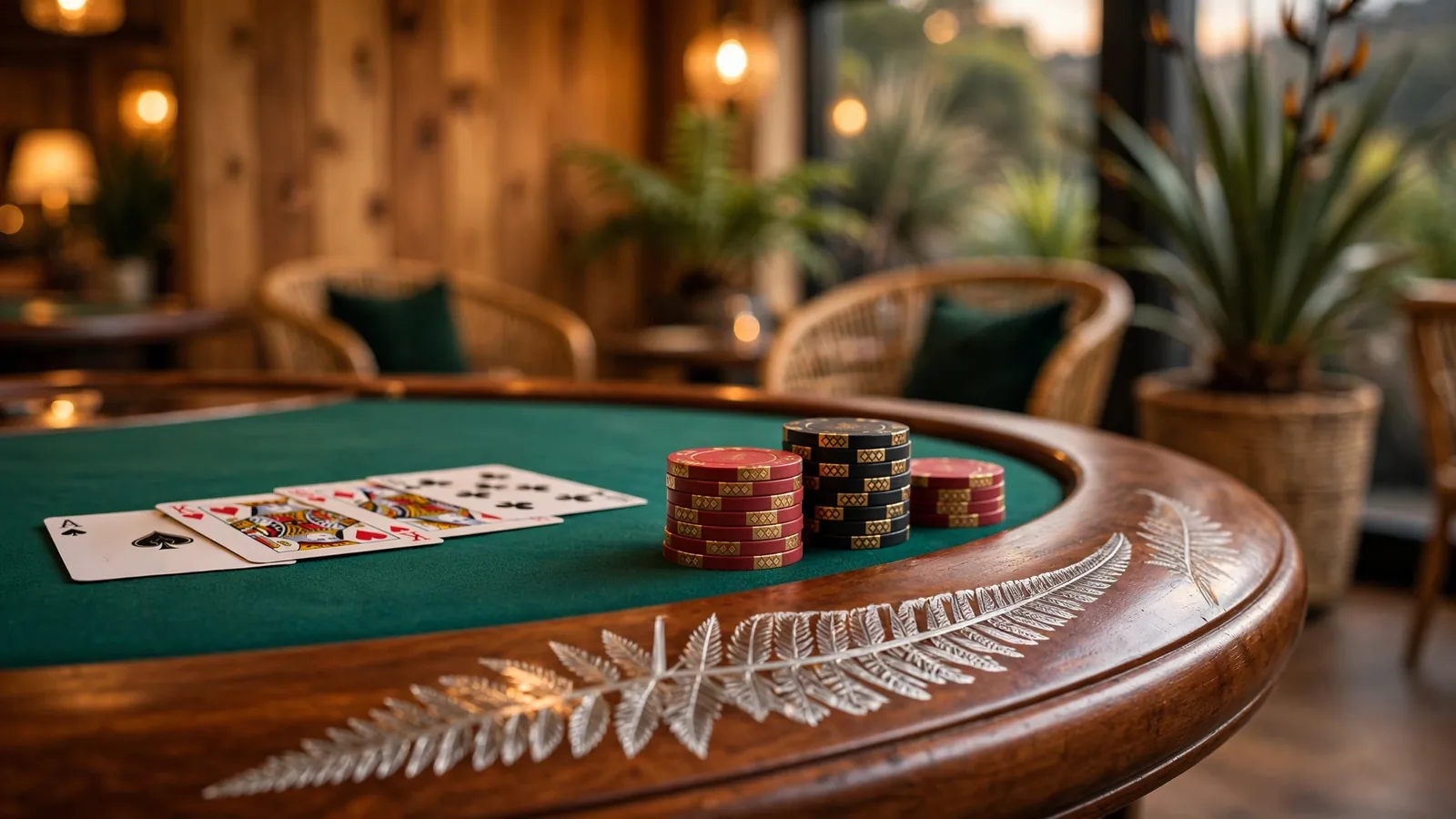
When comparing blackjack payout odds, focus on the exact natural payout shown for each table. A difference between 3:2 and 6:5 can affect the value of a natural, so it is worth noticing before you place a wager. Keep the distinction clear: the listed term describes the reward for that result, while the cards and the game’s other conditions determine what happens in play.
Side Bets, Deck Count and Online Game Formats
The odds for the main blackjack hand are not the same as the odds attached to a side bet. A side bet has its own conditions and possible outcomes, so assess it separately rather than treating it as part of the basic hand. Insurance is another separate wager; for most players, it is better avoided rather than added automatically when offered.
A single-deck game is not automatically the better choice. Deck count is one part of a table’s rules, and it does not tell you the whole story. A specialist review notes that games can also differ in how the dealer handles a soft 17, whether surrender is available and what a natural blackjack pays. Compare the full rule set before deciding what the odds mean for you.

Free Bet Blackjack also needs to be assessed by its own rules, rather than assumed to offer better odds than a standard game. Read how the free-bet feature works and what happens in the outcomes that matter to you. If you are considering a bonus, check its fine print and conditions on a trustworthy site before playing with real money. Blackjack may count differently toward wagering requirements, and maximum bet rules may apply while you meet them.
Game format changes the pace and feel of play. RNG blackjack uses software shuffles, so hands can move faster. Live-dealer blackjack uses actual cards and resembles a casino table, but streaming can introduce delays, and some games may require higher bets. Faster play can mean decisions come around more quickly; set a budget beforehand and do not chase losses.
Deck count and format are useful comparison points, not shortcuts to a better result. Look at the table’s rules, side-bet terms and game conditions together, and keep side wagers separate from your view of the main hand.
Can you beat online blackjack by counting cards?
Not in RNG blackjack: software shuffles the cards. Live-dealer games use actual cards, but card counting does not guarantee a win.
Does blackjack always pay 3:2?
No. A natural blackjack often pays 3:2, but some tables pay 6:5, so check the table’s rules.
Is card counting illegal?
No. Using mental calculation to count cards is not illegal under New Zealand law.
Published by the Casino Expert NZ team.