Roulette Strategies for New Zealanders: Risks and Rules
 Available in US
Betting systems can organize choices, but they cannot control random spins or remove the risks created by roulette’s rules.

Table of Contents
- Why the Martingale Can’t Make Roulette Safe
- What a Roulette Strategy Can—and Can’t—Change
- Random Spins, Risk, and the Limits of a “Working” Strategy
- Double-or-Nothing Bets and the Zero-Rules Difference
- Choose Your Roulette Table Before Your Betting System
- A “Best Strategy” Starts With the House Edge
- There Is No Sure-Win Route to a Big Roulette Win
- Roulette in New Zealand: Rules, Bonuses, and Responsible Limits
- D’Alembert, Fibonacci, and Wheel-Based Called Bets
- Flat Betting and the Risk of Every Stake
Why the Martingale Can’t Make Roulette Safe
The Martingale is built around a simple response to a loss: increase the next stake, commonly by doubling it, then keep raising it after each further loss. The idea is that a later win will recover the earlier losses and leave a small gain. That sequence can look orderly on paper, but it depends on having enough money and room to keep increasing the bet until a win arrives.
The difficulty is that losses can continue for longer than a player can comfortably fund. Each increase makes the next stake larger than the last, so a losing run can quickly turn a modest starting bet into a substantial demand on your balance. The system does not spread the risk evenly. It concentrates more money in later bets, precisely after losses have already accumulated.
A win after losses may recover the amounts staked and produce the intended small gain, provided the player can place the necessary larger bet and the win
What a Roulette Strategy Can—and Can’t—Change
A roulette strategy can give your decisions a structure. It might set a routine for choosing bets, decide when you will stop, or help you keep track of what you have staked. That can make your play more deliberate, but it does not give you information about where the ball will land. No betting pattern makes a future spin predictable.
Each spin is independent. Earlier results do not alter the probability of outcomes on the next spin, even if a particular colour or number has appeared repeatedly, or has not appeared for some time. A strategy that reacts to a run of results is still a way of organising your choices; the run itself does not make a different result due.
This distinction matters when assessing ideas described as secure, high-percentage or profitable. A system may define a consistent routine, but consistency is not the same as security. A bet can lose, and a sequence of bets can leave you with less money than you started with. A plan cannot turn the random outcome into a dependable source of income.

You may see systems associated with a fixed budget, a staged sequence of stakes, or betting on a broad portion of the layout. These describe different ways of selecting or arranging bets. None makes the covered outcomes certain, and none changes the wheel. Even a method presented as a long-term approach cannot make independent spins compensate for earlier losses or follow a schedule.
The same limit applies to strategies built around a particular table experience. An immersive presentation may change how the game looks and feels, not the independence of its spins. Likewise, a plan based on a single-zero wheel is not a method for predicting results. Single-zero European Roulette has a house edge of 2.70%; a staking routine does not remove that cost.
A strategy can still be useful as a personal boundary. You might decide in advance how long to play, what choices you are prepared to make, and when to stop. Those decisions can help you avoid improvising under pressure. They do not guarantee that you will leave ahead, and they should not be treated as a way to recover money already lost. Keep any limit within what you can afford to lose.
It is also worth separating a bet-selection rule from a staking rule. One tells you which outcomes to back; the other governs how your stake changes. Combining them may make a system sound more elaborate, but complexity is not evidence that it improves the chance of a favourable result. A strategy can be written down carefully and still face the same uncertainty as an unplanned bet.
There is no universally most profitable roulette strategy in the sense of a system that reliably produces profit. The result depends on the spins, and the house edge remains part of the game. What a strategy can offer is a framework for making choices and keeping to boundaries you set. What it cannot offer is control over the wheel.
No betting pattern makes a future spin predictable. Each spin is independent.
When you assess any system, ask what it actually changes. If it changes your bet size, selection, or stopping rule, it changes your behaviour. If it claims to make previous results predict future ones, or to make a random outcome safe, it is promising more than a betting routine can deliver. Treat the plan as a way to manage your decisions—not as protection from losing.
Random Spins, Risk, and the Limits of a “Working” Strategy
A roulette routine can feel convincing when it produces a run of wins. You may follow a set of rules, see your balance rise and conclude that the method has found a reliable way to predict the wheel. But a favourable stretch is not proof that the routine controls what happens next. The result of each spin remains uncertain, and a real-money bet can lose.
Roulette spins are independent. A previous result does not alter the probability of any outcome on the next spin. A number that has not appeared for a while is not therefore due, and a recent sequence does not make the next spin follow a pattern. The wheel does not keep track of what has happened or respond to a player’s decisions.
This is why claims about a strategy that “really works” need careful interpretation. A strategy can work as a personal routine: it may help you decide what to bet, when to stop, or how to keep your play consistent. Those are changes to your conduct, not to the wheel. A routine cannot make an uncertain result certain or make past results useful as a forecast.
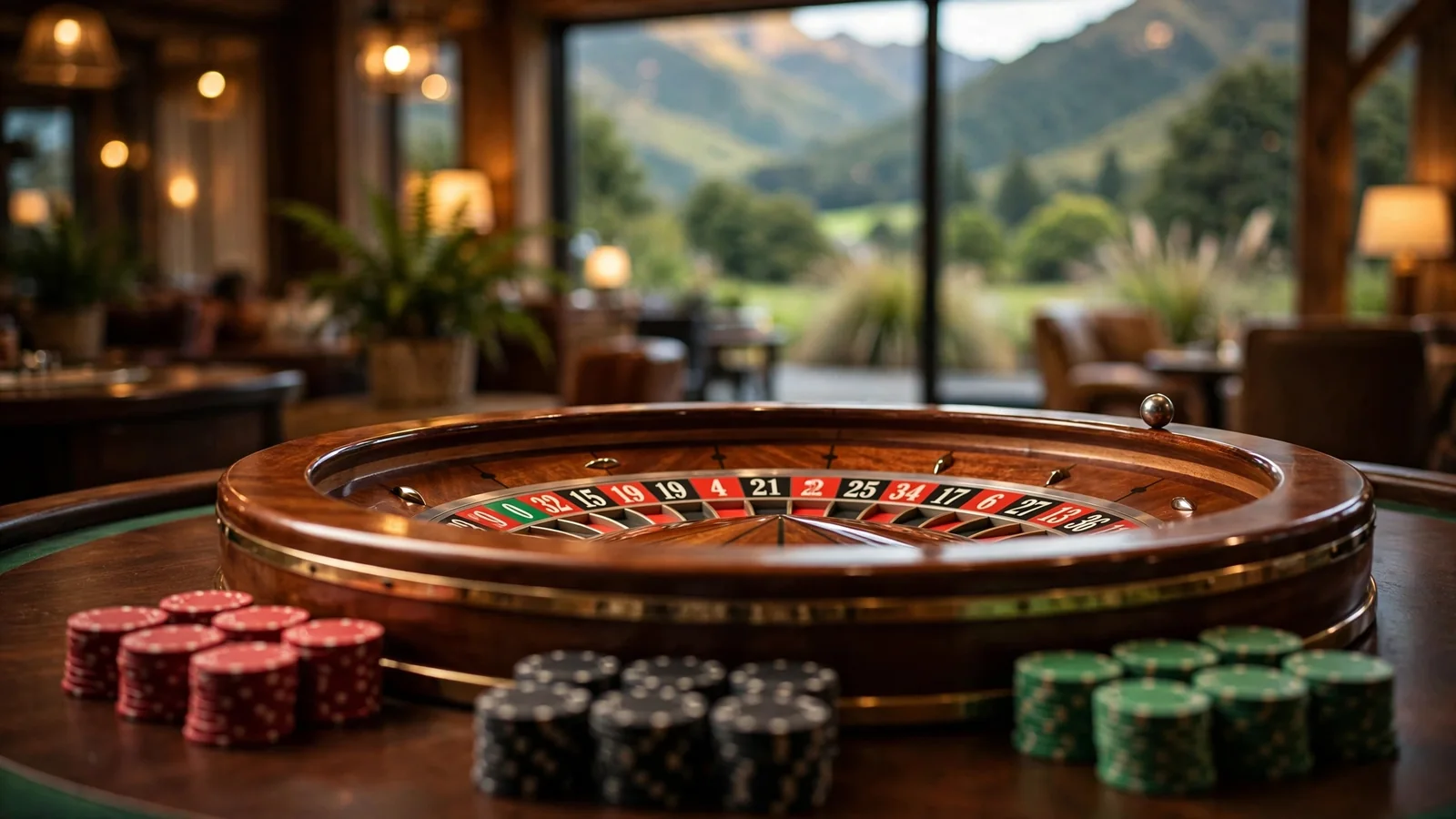

The same distinction applies to live roulette. Seeing the wheel spin in real time may make the experience feel more immediate, but it does not make outcomes predictable. A live presentation does not turn a betting rule into information about the next result. Unless the game’s rules themselves change the conditions of a bet, the choice to follow a strategy does not alter the underlying chance.
“Low risk” can also mean different things. A player might mean that a stake is modest, that they are trying to keep their spending controlled, or that they expect losses to be rare. Those are not interchangeable. Choosing a stake you can afford to lose may help limit the financial impact of a session, but it cannot ensure that a bet wins. A low-stake bet is still exposed to the possibility of loss, and repeating it does not remove that uncertainty.
The game’s built-in cost remains relevant as well. European Roulette has 37 pockets, including one zero, and a house edge of 2.70%. That edge does not predict the outcome of a particular spin; it describes the mathematical disadvantage built into the game over time. A short session can end in a win or a loss, and neither result proves that a strategy has changed the odds.
Attention A strategy cannot make previous results predict future ones, or make a random outcome safe.
Be wary of a “100% working” system or a promise that a method makes roulette dependable. A persuasive explanation may describe a sequence of choices in detail while leaving the central issue untouched: the wheel can still produce an unfavourable result. Even a strategy that has gone well for you so far gives no assurance about the next bet.
Before playing, decide what you can afford to lose and treat that amount as at risk, not as money a strategy will protect. If the uncertainty feels uncomfortable, stepping away is a valid choice. The useful limit of any roulette routine is that it can organise your decisions; it cannot promise a winning result.
Double-or-Nothing Bets and the Zero-Rules Difference
A double-or-nothing approach sounds simple: win and receive an amount equal to your stake; lose and forfeit it. That description can make roulette seem like a straightforward choice between two outcomes. The zero complicates the picture. On an even-money outside bet, such as red or black, odd or even, zero is neither side. If it lands, the bet can be lost even though the wheel has not shown the colour or range you backed.
This is why a routine built around doubling up after a loss cannot make roulette a winning proposition. Changing the size of your next stake changes how much you could win or lose, but not the wheel’s result. Nor does a larger stake turn zero into a winning outcome. Any claim that a double-up sequence guarantees profit overlooks the possibility of zero, continued losses, or simply reaching a point where you cannot or do not want to keep increasing your bet.


French Roulette offers a different treatment of zero for eligible bets. It uses the same single-zero wheel layout as European Roulette, but can include La Partage or En Prison. These rules concern even-money outside bets, and they come into play when zero appears. They do not apply to every type of wager on the layout, so a player should not assume that any bet receives the same protection.
With La Partage, zero does not take the whole stake on an eligible even-money bet. Half is returned, while the other half is retained by the casino. That softens the loss on that spin; it does not turn the result into a win or guarantee that the next spin will favour you. The distinction matters: a smaller loss is still a loss.
En Prison handles the same situation differently. After zero, the even-money bet is held for the next spin rather than being settled immediately. If that following result favours your selection, the original stake comes back to you, but there is no additional profit from it. If the next result goes against you, the stake is collected. The rule gives the bet another chance to be returned, not a guaranteed winning outcome.
- Check the table rules before placing a bet
- Decide what you can afford to lose
- Treat the lower house edge as a more relevant starting point
- Rely on a strategy name alone
- Assume a familiar label guarantees a particular rule
- Use a betting system to guarantee a winning result
When either rule applies, the house edge on French Roulette falls to 1.35% for the eligible even-money bets. This is a meaningful improvement to those bets’ conditions, but it is not a promise of profit. The reduction concerns the mathematical cost of playing over time; it cannot tell you what will happen on an individual spin. Your stake can still be lost, and a sequence of favourable results is never assured.
So, if you are weighing a supposed roulette double-up method against a zero rule, separate the two ideas. A betting progression changes the pattern of your stakes. La Partage and En Prison change how an eligible bet is settled when zero lands. They are not interchangeable, and neither makes a double-or-nothing plan certain to succeed. Check the table’s stated rules before placing a bet, and treat any returned or retained stake as a change in the loss on that outcome—not evidence that a system has made the next spin predictable.
Choose Your Roulette Table Before Your Betting System
Before deciding how to place bets, check which wheel and rules the table uses. A betting routine cannot compensate for a less favourable set of table conditions. This is the practical starting point whether you are learning how to play roulette or comparing tables at an online casino.
European Roulette has 37 pockets: numbered pockets and a single zero. Its house edge is 2.70%. American Roulette has 38 pockets, because it includes both a single zero and a double zero, and its house edge is 5.26%. That extra pocket changes the underlying odds, even though the table may look familiar and offer the same kinds of bets.


French Roulette has the same single-zero layout as European Roulette, but it can include rules such as La Partage and En Prison. When those rules apply, the house edge is 1.35% for eligible even-money bets. The reduced edge applies under those specific conditions; it does not cover every bet on the table or make a result certain. Check the table rules rather than relying on the game’s name alone.
This is why a search for the best strategy to play roulette should begin with the table, not a staking pattern. A routine for choosing bets may help you keep your play organised, but it does not change how many pockets the wheel has or which rules apply. Once you know the table conditions, you can decide whether the available bets and rules suit your preferences.
The same point matters if you are considering black or red, streets, or another bet selection. Those choices describe where a stake is placed; they do not alter the wheel’s layout. A streets strategy may give you a particular way to group numbers, but it cannot make those numbers more likely to appear. Nor can a small bankroll change the table’s edge. If you have a fixed amount set aside, table rules affect the mathematical cost of play, while your stake size determines how quickly money may be exposed to results.
The Table Matters
Identify the game type and specific table rules before choosing a betting system.
You may also encounter a named approach such as a “Fisher” strategy, or look for free tips and a beginner’s introduction to roulette strategies. Treat any such method as a way to structure decisions, not as a substitute for checking the table. First identify whether the game is European, American, or French, then read the rules shown for that specific table. Similar-looking games can carry different conditions.
When comparing tables, focus on the pocket count and any rule that changes how a bet is settled. Do not assume that a familiar label guarantees a particular rule, especially where special zero rules are concerned. The table information is more useful than a strategy name because it tells you what conditions your bets face.
If you are choosing between tables, the lower house edge is a more relevant starting point than a promise that a betting system will perform well. It still does not make roulette safe: outcomes remain uncertain, and every real-money bet can lose. Do not risk more than you can afford to lose.
A “Best Strategy” Starts With the House Edge
Choosing a roulette strategy is only part of your decision: you should also check the information available about the casino you plan to use. This list gives you a concise reference point as you explore roulette options in New Zealand for 2026.
License: Malta Gaming Authority, licence no. MGA/B2C/394/2017 N1 Casino is listed with a Malta Gaming Authority licence, number MGA/B2C/394/2017. That licence detail is the available point of reference here.
License: Tobique Gaming Commission, licence no. 0000002 Ricky Casino is listed with a Tobique Gaming Commission licence, number 0000002. No other operator details are provided here.
License: Tobique Gaming Commission, licence no. 0000064 Neospin is listed with a Tobique Gaming Commission licence, number 0000064. No other operator details are provided here.
License: 07017519840 · Payout speed: 1-3 business days Zotabet has a listed licence identifier, 07017519840, and a stated payout speed of 1–3 business days. These are the available details to consider.
License: Malta Gaming Authority, licence no. MGA/B2C/370/2017 Play Grand is listed with a Malta Gaming Authority licence, number MGA/B2C/370/2017. That licence detail is the available point of reference here.
Payout speed: 1-3 business days Wintino states a payout speed of 1–3 business days. No licensing information is provided here.
License: Tobique Gaming Commission, licence no. 0000091 7Bit Casino is listed with a Tobique Gaming Commission licence, number 0000091. No other operator details are provided here.
License: Curaçao Gaming Authority, licence no. OGL/2024/165/0185 BitStarz is listed with a Curaçao Gaming Authority licence, number OGL/2024/165/0185. That licence detail is the available point of reference here.
Payout speed: 1-3 business days Lamabet states a payout speed of 1–3 business days. No licensing information is provided here.
Looking for the best roulette strategy ever, or the most successful approach, can make it seem as though a particular sequence of bets is the key to better results. But a betting routine cannot change the price built into a roulette game. Before judging any strategy, look at the table’s house edge: the casino’s mathematical advantage over repeated play.
For single-zero European Roulette, that edge is 2.70%. It reflects the game’s rules, not your choice of stake pattern. A strategy may help you decide when and how much to bet, but it does not alter that underlying cost. So if you are asking whether roulette has a strategy, the useful distinction is between a method for organising bets and a way to improve the game’s mathematical terms. The former is possible; the latter does not come from a staking routine.
You may also see payout percentages presented as a guide to value. A specialist review reports a 97.30% payout percentage for European Roulette and 94.70% for American Roulette. These figures describe expected returns over extensive play under the stated rules; they are not a forecast of what you will receive in a session, and they do not promise that you will get any particular share of your money back. The difference between a payout percentage and a house edge is a matter of framing: one describes the theoretical return, while the other describes the casino’s corresponding advantage.
That distinction matters when comparing claims about the best roulette strategy in 2026 or a roulette best strategy to win. A system may feel effective because it gives you a clear routine or because a short run of results went your way. Neither outcome shows that the approach has reduced the house edge. If the underlying rules are unchanged, changing the stake or the order of bets does not turn the theoretical cost into an advantage for the player.
House Edge
The mathematical advantage the casino has over the player over time.
Treat claims about a “most successful” stake roulette strategy with the same care. Ask what success means: a more orderly way to manage bets, a longer session, or a mathematical improvement in the game? Those are not interchangeable. A system can structure your decisions, but no label such as “best” can substitute for checking the table’s rules and edge. And the payout percentage is not a personal return guarantee: any real-money bet can lose.
A sound comparison begins with the table’s stated rules and the mathematical terms attached to them, not with a promise that a betting system will deliver profit. That gives you a more grounded way to assess what a strategy can offer: structure for your choices, rather than a better roulette outcome by design.
There Is No Sure-Win Route to a Big Roulette Win
A roulette strategy to win big cannot make a particular result certain. Choosing a number, colour or outside bet may shape what you stand to receive, but it does not control where the ball lands. A larger stake can increase the amount at risk; it cannot turn an uncertain result into a sure win.
That remains true whether you play at a live table or use an electronic roulette machine. The display may make spins feel separate from a physical wheel, but the important point is unchanged: each result is uncertain, and a previous run does not tell you what the next spin will be. A streak of red does not make black due, and a number that has not appeared for a while is not owed a turn.


This is why no win roulette strategy can promise a large return. A routine can guide your choices, but it cannot identify a future winning result. Nor does changing your selection after a loss improve the odds of the next spin. Treat claims of a sure-win roulette strategy with care, especially when they rely on a supposed pattern, prediction or guaranteed recovery.
The size of a possible payout can also distract from the chance of losing the stake. A high-risk selection may offer a larger return if it wins, but that does not mean it is more likely to land. Even choosing a bet that covers several outcomes cannot make the uncovered outcomes disappear. Every real-money bet can lose.
The wheel itself matters to the underlying risk. On American Roulette, the wheel has 38 pockets: a single zero, a double zero and numbered pockets. Its house edge is 5.26%, so the rules leave the casino with a mathematical advantage over repeated play. That figure is not a forecast of what will happen in one session; short-term results can vary, including a win. But a lucky result does not show that a system has made future spins safer.
A roulette progression strategy changes how much you stake as play continues. It may make your decisions feel structured, yet it cannot make the ball favour your next choice. If you set out hoping to win big, remember that increasing stakes can make a losing sequence more costly, not more predictable.
Warning Every real-money bet can lose.
Decide what you can afford to lose before playing, and do not exceed that amount in pursuit of a target or to recover a loss. If the result you need is a guaranteed win, roulette cannot provide it.
Roulette in New Zealand: Rules, Bonuses, and Responsible Limits
New Zealand’s online casino rules are changing. The Online Casino Gambling Act 2026 came into force on 1 May 2026, establishing the country’s first domestic licensing framework for online casino gambling. During the transition, which runs until 1 December 2026, providers that were already serving New Zealand customers before the Act began may continue under its transitional provisions. The full licensing regime is expected to be operational in 2027.
The Department of Internal Affairs is New Zealand’s primary gambling regulator and oversees the online casino licensing framework. The Gambling Commission hears and decides casino licence applications, issues online casino licences and approves changes to licence conditions. These roles matter when assessing how the new system is being put in place. Before the Act, offshore online casino gambling was not supervised or licensed by a New Zealand regulator, and customers had no domestic government recourse if a dispute arose.
Bonuses can add conditions to a roulette offer, so read the terms before accepting it. They may set eligibility rules, expiry periods, game-contribution limits and restrictions on withdrawals. Bonus money must be wagered 50X within 30 days, while winnings from free spins must be wagered 50X within 7 days. A withdrawal request voids all active or pending bonuses. That can affect both the bonus and any associated offer, so check the stated conditions rather than assuming a balance is freely withdrawable.

A bonus is not a safer strategy for roulette. If you choose to play, decide in advance what you can afford to lose and do not risk more than that amount. Do not increase your spending to meet a wagering condition or try to recover losses; a bonus does not make a spin more predictable.
The transition also means that the legal position depends on the provider and the stage of the new regime. Providers that were not already operating in New Zealand before 1 May 2026 do not fall within the stated transitional permission. The Act sets out a path toward domestic licensing, but a licence application or a promotional offer alone should not be treated as proof of a particular regulatory status. Check the relevant terms and information carefully before deciding whether to use a service.
D’Alembert, Fibonacci, and Wheel-Based Called Bets
D’Alembert and Fibonacci are progressions for adjusting the size of a stake. They do not make a chosen result more likely, and they cannot use earlier spins to predict the next one. Roulette spins are independent: a run of losses does not make a win due, and a recent win does not make another more likely.
Common Betting Progressions
D’Alembert progression
A player raises the stake by a set unit after a loss and lowers it by that unit after a win.
Fibonacci progression
A numbered sequence is used to determine stake size, moving forward after a loss and back after a win.
Labouchere system
You stake the sum of the first and last entries in a sequence, crossing them off after a win and adding the lost amount to the sequence after a loss.
With a D’Alembert progression, a player raises the stake by a set unit after a loss and lowers it by that unit after a win, often aiming to recover gradually rather than increase sharply. A Fibonacci progression uses a numbered sequence to determine stake size, moving forward after a loss and back after a win. Both approaches rely on a pattern in the player’s decisions, not a pattern in the wheel.
Doubling a bet after a loss is another way to increase stakes, but the larger next wager does not change the probability of winning. It can also make the amount at risk rise quickly if losses continue. Labouchere uses a different structure: you write down a sequence of intended units, stake the sum of its first and last entries, then cross those entries off after a win. After a loss, the lost amount is added to the sequence. The sequence may therefore grow when results go against you; it is not a guarantee that later wins will restore what was lost.

A roulette line bet is different from a progression. It describes where a wager sits on the table layout, covering a group of adjacent numbers there. Called bets, by contrast, refer to groups defined by numbers’ positions around the wheel. The labels can sound similar, but they point to different arrangements: the table shows betting areas, while a called bet follows the wheel’s numbered order.
This distinction matters when you place a bet or follow a dealer’s terminology. Check whether the selection is defined by the table or by the wheel, rather than assuming that neighbouring numbers on the felt are also neighbours on the rim. Either way, selecting a group does not make its outcomes predictable. A progression changes how much you stake as results unfold; a called bet changes which numbers you cover. Neither alters the chance of a result on a future spin, and every real-money bet can lose. Keep any stake within what you can afford to lose.

Flat Betting and the Risk of Every Stake
Flat betting means placing the same stake on each spin rather than changing it in response to wins or losses. This can make your spending easier to track: you know what you intend to risk each time. But consistency is not protection. A flat stake can still lose, and repeating it does not reduce the roulette wheel’s house edge.
The results of spins are independent. A previous loss does not make a win more likely on the next spin, and a previous win does not make a loss due. Keeping your stake unchanged can help you avoid reacting to a short run of results, but it cannot make those results predictable or improve the chance that your chosen bet wins.
That is why flat betting is not automatically the safest roulette betting strategy. It avoids escalating stakes, yet your bankroll can still fall through repeated losing bets. Decide in advance what you can afford to lose, and stop when you reach that amount; do not increase your budget to recover losses. Never risk money needed for essentials.
Stake consistency and table odds are separate considerations. European Roulette has 37 pockets, including one zero, and its house edge is 2.70%. A fixed stake does not alter that edge. The wheel and the rules determine the underlying odds; your staking routine determines only how much you put at risk each time.
If you choose flat betting, keep the stake at a level you can accept losing on every spin, not one that depends on a win arriving soon. It may provide a simple structure for play, but no pattern of equal stakes can remove uncertainty or guarantee that your balance will last.
Published by the Casino Expert NZ team.