
NZ Casinos with Slot Machines: A Practical Guide
 Available in US
Slot outcomes are independent, so recent wins and losses do not reveal what a game will pay on its next spin.

Table of Contents
- What a Slot Spin Can—and Cannot—Tell You
- How Free Play Helps You Learn a Slot
- RTP, Audits and the Meaning of a Slot’s Payback
- Playing Online: Software Types and Review Checks
- New Zealand’s Online Casino Licensing Transition
- Why Slot Odds Feel Different Across Games
- Browser Play or a Casino Download?
- Set Your Limits Before You Start
- What You Can Verify About Four Winds Casino in New Buffalo
- What a High RTP Claim Actually Tells You
What a Slot Spin Can—and Cannot—Tell You
A losing spin can make the next one feel important. Perhaps the reels stopped just short of a prize, or the machine has gone a long time without showing a noticeable win. It is natural to look for a pattern and wonder whether the next spin is more likely to pay. But a slot’s recent results do not tell you what its next result will be.
Virtual pokies use pseudorandom number generator software to determine outcomes. The software produces numbers that are used to select results in the game. The sequence is generated by a program; it is not a record of the machine waiting for a particular player to win. Seeing a run of results does not reveal a reliable way to predict what will follow.
The important point is that each spin is independent. A spin does not remember whether the previous one won or lost, and a string of losing results does not make a win due. The same is true after a win: it does not mean that another win is now more or less likely simply because the last spin paid. The previous result has already happened; it does not build credit towards a future result.
Choosing a casino for slot machines in New Zealand means weighing the details available for each option. Use this list to see which operator information is provided before deciding what suits you.
License: Malta Gaming Authority, licence no. MGA/B2C/394/2017 N1 Casino lists a Malta Gaming Authority licence, number MGA/B2C/394/2017. You can use that licensing detail as one point of reference when considering it.
License: Tobique Gaming Commission, licence no. 0000002 Ricky Casino lists a Tobique Gaming Commission licence, number 0000002. You can take this stated licence information into account when considering the operator.
License: Tobique Gaming Commission, licence no. 0000064 Neospin lists a Tobique Gaming Commission licence, number 0000064. You can use the listed licence as a reference point when considering it.
License: 07017519840 · Payout speed: 1-3 business days Zotabet lists the licence identifier 07017519840 and a payout speed of 1–3 business days. These are the available details to consider when assessing the operator.
License: Malta Gaming Authority, licence no. MGA/B2C/370/2017 Play Grand lists a Malta Gaming Authority licence, number MGA/B2C/370/2017. You can take that licensing detail into account when considering it.
Payout speed: 1-3 business days Wintino lists a payout speed of 1–3 business days. You can consider this stated payout information when assessing the operator.
License: Tobique Gaming Commission, licence no. 0000091 7Bit Casino lists a Tobique Gaming Commission licence, number 0000091. You can use that information as a reference point when considering the operator.
License: Curaçao Gaming Authority, licence no. OGL/2024/165/0185 BitStarz lists a Curaçao Gaming Authority licence, number OGL/2024/165/0185. You can take the stated licensing detail into account when considering it.
Payout speed: 1-3 business days Lamabet lists a payout speed of 1–3 business days. This is the available detail to consider when assessing the operator.
That matters when you are trying to work out how to win at slot machines in casinos. There is no sequence of button presses, waiting period or response to recent reels that can make an independent outcome pay. Watching other people play does not reveal a dependable pattern either. A machine may appear to behave differently from one moment to the next, but that appearance is not a signal that its next result can be read.
Near-misses can be especially persuasive. A symbol landing close to a winning line may look as though the game almost paid, and several such results can encourage you to keep playing in expectation of a reversal. Yet “almost” is a description of what you saw, not evidence that the next spin is closer to a win. The game’s software determines each outcome independently; the visual impression of a sequence does not change that.
The same caution applies to a machine that seems unusually generous. A win, or even several wins, can happen, but those results do not establish that you have found a system. They also do not show that the next spin is likely to repeat the pattern. If you are asking how to win on casino slot machines, the honest answer is that you cannot use past spins to control or forecast the next one. A result may be favourable, but no observation of earlier outcomes makes it dependable.

Changing your approach does not alter this principle. Increasing a stake after losing, switching machines because one has been quiet, or staying because one has recently paid does not make a game due. Those choices may change how much you put at risk, but they do not turn the previous results into information about the next outcome. A sense that you have spotted a rhythm is not the same as a prediction.
This does not mean that every game looks or feels identical. The symbols, animations and features can differ, and a sequence can feel dramatic when it includes wins or near-misses. But presentation is not a promise about what follows. A streak is simply a sequence of outcomes, not proof that a machine is warming up, cooling down or responding to your play.
So, how to beat casino slot machines? There is no reliable trick that makes the software produce a desired result. The useful distinction is between what you can observe and what you can know. You can see the result of a spin. You cannot infer from that result that the next one is due to pay, or that a particular pattern will continue. Treating each spin as uncertain is more realistic than trying to decode a machine from its recent history.
This is worth remembering before a session becomes a search for a turning point. A loss does not create an obligation for the game to pay you back, and a win does not provide a forecast of another. If you choose to play, make that choice knowing that a run of results cannot supply a method for beating the machine. A spin can show you what happened on that spin—and no more.
- Treat each spin as an independent event
- Use demo mode to learn game mechanics and rules
- Use RTP as descriptive information rather than a forecast
- Set clear limits before you start playing
- Try to find patterns in recent results
- Believe that a win makes another win more likely
- Assume a demo mode result predicts a paid session
- Use RTP to forecast your personal return
How Free Play Helps You Learn a Slot
Demo mode lets you try a pokie’s features without wagering. It is useful when you want to understand the layout and rules before deciding whether to play for money. Treat it as a way to learn how a particular game works, not as a preview of what a paid session will deliver.
When a demo is available, take time to read the game’s information panel and explore its controls. You can see how the reels are arranged, what the symbols mean and which features the rules describe. If the game includes a bonus feature, the demo may let you see how it operates. That can make unfamiliar instructions easier to follow than they are when you are also keeping track of a real stake.
Free play can also help you decide whether a game’s pace and presentation suit you. Some pokies have more on-screen features to understand than others. In a demo, you can inspect the interface and learn where to find the rules without wagering while you work it out. If the rules remain unclear, that is a good reason to pause rather than move straight to paid play.
A demonstration is not a reliable guide to how a later session will feel or turn out. It shows the game’s mechanics; it cannot tell you what paid play will produce. Avoid treating a run of demo results as evidence that a particular feature is about to appear, or that you have discovered a pattern to repeat. The practical benefit is familiarity with the game, not a way to forecast its outcomes.
Progressive jackpots need a particular distinction: they do not pay out in demo mode. A demonstration may show how a jackpot feature is presented, but a simulated display is not a chance to receive the shared prize. If a progressive jackpot is central to your interest in a game, do not mistake a demo for participation in that jackpot.

Before switching from free play to wagering, check what changes. The rules and features may be the same, but the stakes are not: paid play involves money, while the demo is for trying the game without wagering. Make sure you understand the controls and any feature you intend to use. If you are unsure what a button does, return to the information panel rather than guessing during a paid session.
Free access can vary by game and platform, so do not assume every pokie offers a demo. Where it is available, use it deliberately: read the rules, try the controls and note any feature you do not understand. Then decide whether you want to play for money at all. You do not need to move from a demo to a paid game just because you have spent time learning it.
The clearest value of free play is modest but useful. It can reduce confusion about a game’s mechanics and help you make a more informed choice about whether to continue. It cannot guarantee a similar experience with money, provide a reliable prediction, or pay a progressive jackpot. Keep those limits in mind, and let the demo remain practice rather than a promise.
RTP, Audits and the Meaning of a Slot’s Payback
RTP, or Return to Player, is a measure of the share of wagers a game is designed to pay back over its entire lifetime. It is often described as a casino slot machine’s winning percentage, but that phrase can give the wrong impression. RTP is not the percentage of spins that win, nor does it describe what you should expect from a particular visit. It is a long-term measure attached to the game.

That distinction matters when you read a percentage on a casino or game page. RTP does not tell you when a payout will happen, how large it will be, or whether a player will finish a session ahead. It describes an aggregate over a game’s lifetime, not a schedule of returns for individual players. A figure can therefore be accurate as a long-run measure while telling you very little about the result of a short period of play.
Some online casinos advertise higher payback percentages, and some publish payout-percentage audits on their websites. An audit can give a claim more context than a bare promotional statement, but the word itself is not a guarantee of a particular outcome. Before relying on one, look at what the published material actually covers: which game or games it refers to, what period is reported, and whether the result is clearly explained. If those details are not apparent, treat the claim cautiously rather than assuming it applies to every game on the site.
It is also worth separating a game’s RTP from a casino-wide claim. A statement about one title does not automatically describe other pokies, and a general claim about a site may not make clear which games or period it covers. Read the wording closely. Does it identify a specific game, or does it make a broad claim about the casino? Is the audit information available alongside the claim, or is the percentage presented without enough explanation to assess its scope? Those distinctions help you judge what the number actually refers to.

There are no secrets to winning casino slot machines hidden in an RTP figure. The number cannot identify a favourable moment to play or turn a long-term statistic into a personal prediction. A higher stated percentage may sound appealing, but it does not establish that you will receive that share during your own play. Nor does an audit promise that any one player’s results will match the reported measure.
Use RTP as descriptive information, not as a forecast. When a casino publishes an audit, read the report and the claim together; do not assume that the presence of a document settles every question about how the percentage is presented. If the explanation is unclear, you can set the claim aside rather than filling in the gaps yourself. This is a more grounded way to compare information than treating a single number as a route to better results.
Keep the meaning narrow: RTP describes a game’s long-run payback, while an audit may provide information about a published percentage claim. Neither tells you what your next session will return. That is the limit of the figure, even when it is clearly displayed or supported by audit material.

Playing Online: Software Types and Review Checks
When you look for a place to play pokies online, separate two questions: how the games are accessed, and what can be verified about the operator’s legal status. A polished website or a review’s positive verdict does not answer both.
A web-based casino runs its games through a browser, so you can play without installing casino software on your computer. A download-based casino requires a software client: you install it before you can play and wager. That difference affects the steps involved in accessing games, but it does not, by itself, tell you whether an operator is authorised to serve New Zealand customers.
What the software choice means
Browser play avoids a separate casino client, while a download requires you to install one. Before installing software, make sure you understand what you are downloading and that it comes from the operator’s genuine website. Be wary of links in unsolicited messages or advertisements that lead to an unfamiliar download page. A review that calls a client easy to use is not evidence that the download is safe or that the operator has the required status.
Likewise, a casino that opens in your browser has not passed a legal check simply because no installation is needed. Treat the access method as a practical detail, not a quality mark. If you cannot tell who operates the site, or the review does not make that clear, do not let a convenient way to open a game stand in for due diligence.
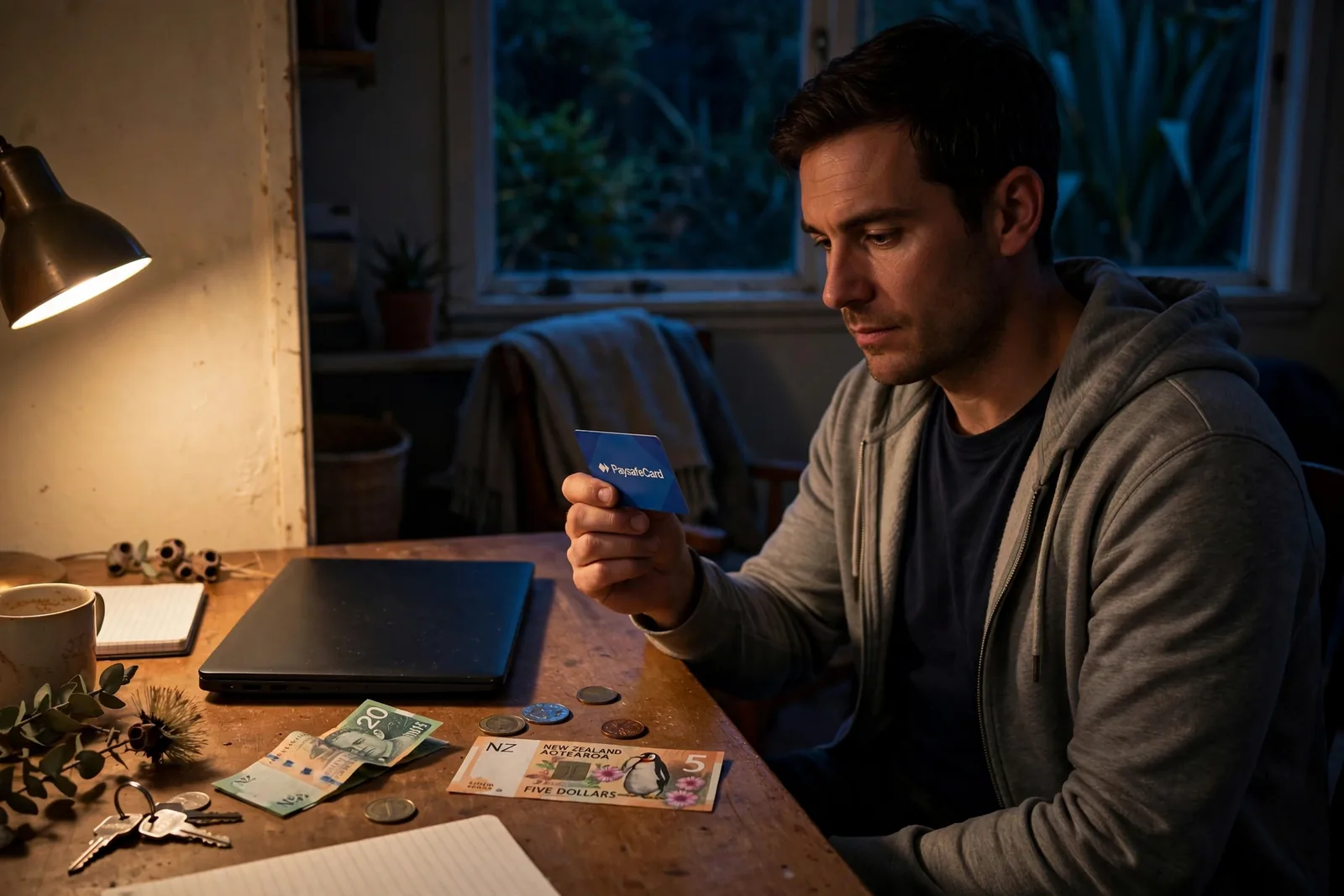
How to read reviews in New Zealand
Reviews can help you identify what to investigate, but promotional language is not independent confirmation. Claims such as “trusted”, “secure” or “fully licensed” need to be tied to verifiable information. Look for the name of the operator and the jurisdiction or authority behind the stated licence. Then check the Department of Internal Affairs’ official information about New Zealand’s online casino licensing framework. The Department is the regulator for that framework; an operator’s logo or a review’s assurance is not a substitute for confirmation from the regulator.
New Zealand is introducing a domestic licensing regime, so pay attention to the status a review is describing and when that information was checked. Do not assume that a foreign licence is a New Zealand licence, or that a general claim about regulation proves domestic authorisation. A review should distinguish the operator’s own claims from information that can be checked through the responsible authority. If it gives no way to make that distinction, treat its licensing verdict cautiously.
Reviews also age. A page may keep its headline or rating after the details of an operator’s status have changed. Look for a clear update date and specific, current statements rather than broad assurances. If a review discusses licensing without identifying the operator or the relevant authority, it has not given you enough to verify the claim.

You can use a review to build a short checklist: identify the operator, note whether games run in a browser or require a client, and verify the licensing claim against the Department of Internal Affairs’ information. If a review recommends a site but leaves the legal status unclear, do not treat the recommendation as proof that the site is authorised. The key distinction is simple: browser or download describes how you reach the games; verification concerns who is offering them and what status applies in New Zealand.
New Zealand’s Online Casino Licensing Transition
New Zealand’s online casino rules changed in 2026, but the shift to a fully licensed market is not immediate. The Online Casino Gambling Act 2026 took effect on 1 May 2026, establishing the country’s first domestic licensing framework for online casino gambling. The Department of Internal Affairs is responsible for regulating that framework.
The Gambling Act 2003 has prohibited online casinos from being based in New Zealand. Its focus is on operators running casino services from within the country, not on punishing individual players for using an offshore website. Before the new Act, offshore online casino services were not licensed or supervised by a New Zealand regulator, leaving customers without domestic government recourse if a dispute arose.
The 2026 Act includes a transition period. Online casinos that were already serving people in New Zealand before 1 May may continue to do so until 1 December 2026, subject to the Act’s transitional provisions. That allowance is temporary; it should not be read as proof that every site currently accessible to New Zealanders holds a local licence.
The full licensing system is not expected to be operational until 2027. An earlier specialist review described the rollout as expected from 2026 and said the framework was initially expected to allow as many as 15 licences. Those statements describe expectations, not a guarantee that licences are already available or that a particular operator has obtained one. For a reader considering online pokies in 2026, the date and transitional status matter: access to a site does not by itself show that it is locally licensed.
During the period before the full regime is in place, avoid treating a promotional claim or a foreign licence as equivalent to New Zealand oversight. The new framework is intended to create a domestic licensing system, but the transition has defined limits and the eventual regime is still ahead. Check official Department of Internal Affairs information for current regulatory updates rather than relying on a casino’s own description of its status.
This is a change in how providers are regulated, not a reason to assume that a player is the target of the Gambling Act 2003. Keep the distinction clear: the law prohibits domestic online casino operations under that Act, while the newer legislation sets out a licensing path and transitional arrangements for providers. Gambling is for adults only; the legal transition does not remove the need to approach play carefully.
Why Slot Odds Feel Different Across Games
When you compare pokies, “better odds” can mean different things. You might be looking for frequent, modest returns, or you might be willing to accept longer periods without a payout in the hope of a larger one. Volatility describes that difference in the pattern of payouts; it does not identify a game that is more likely to suit every player.
Volatility Types
Low-volatility pokies tend to pay out more regularly with smaller amounts, while high-volatility pokies tend to have longer quiet stretches with larger payouts.
Low-volatility pokies tend to pay out more regularly, with smaller amounts. That can make a session feel steadier, because payouts may interrupt losing runs more often. It does not mean each return covers what you have staked, or that a payout will arrive at a predictable moment. Frequent small wins can still leave you down overall.
High-volatility pokies tend to have longer quiet stretches, with larger payouts when wins occur. That pattern can feel less predictable in practice: you may play for some time without a notable return. A larger possible payout does not make that wait shorter, nor does it make a win certain. If you would find a long stretch without a payout difficult, a high-volatility game may not match your comfort level.
Neither style is automatically the best choice. The word “odds” is sometimes used loosely, but volatility is about how payouts tend to be distributed, not a promise of better results. A low-volatility game is not a guarantee of regular profit; a high-volatility game is not a reliable route to a large win. The label can help you anticipate the broad feel of play, but it cannot tell you what will happen during your session.
Before choosing a pokie, consider which pattern you can tolerate without changing your plans in response to a losing run. If smaller, more frequent payouts sound more manageable, low volatility may feel more comfortable. If you are considering high volatility, be prepared for quieter stretches and avoid treating a potential larger payout as an expected outcome. Either way, decide what you are comfortable spending before you start, and stop when you reach that limit.
A game’s volatility is only one part of how it feels to play. It is useful for setting expectations, not for finding a machine that will pay when you want it to. No volatility label can turn a possible outcome into a dependable one.
Browser Play or a Casino Download?
The practical difference is where the casino software runs. With browser-based play, you open the casino in a web browser and access its games without installing casino software on your computer. With a download-based service, you first obtain a software client and use that program to play and wager.
For someone looking for a casino game or pokie to play online, browser access means there is no separate casino client to download. You use the browser as the point of access instead. That can make the process more direct when you want to move between browsing the site and opening a game. The casino’s games still run as online games; the distinction is that you do not install its dedicated client on your local computer.
A download-based casino adds a step before play: you need to download its client. You then use that installed program to access the casino games and place wagers. This is a different access method, not a different kind of spin or a promise of a better playing experience. It also means the casino’s software is present on your computer, rather than accessed only through a browser.
Neither option should be treated as automatically suitable for every device or situation. Consider how you prefer to access online services and whether you are comfortable installing a dedicated program. If you do not want casino software on your computer, browser-based play avoids that particular requirement. If you choose a downloadable option, make sure you understand that wagering takes place through the client, not simply by opening a game in a browser.
Browser vs Download
Browser play allows you to access games without installing software, while download-based play requires installing a software client on your computer.
Before you play, keep the New Zealand context in mind: online casino access is subject to a changing domestic framework, and access alone does not establish that a service is licensed locally. Do not treat a working website or a downloadable client as proof of regulatory approval. Check the applicable age requirement before gambling, and do not proceed if you cannot establish that you meet it.
The choice between browser play and a download is ultimately about access. A browser lets you play without installing casino software locally; a download-based casino requires its client for play and wagering. That distinction can help you decide which format fits your preference, but it says nothing by itself about the outcome of a game.
Set Your Limits Before You Start
Decide the most you are prepared to lose before opening a pokies game, and treat that amount as the stopping point—not as a target to spend. Choose money you can afford to be without, rather than funds needed for bills, food or other commitments. Once you reach your limit, stop playing. Do not revise it upward because a session has gone badly or because you feel a win is close.
A limit is useful only if it is clear and settled in advance. If you find yourself bargaining with it during play, take that as a reason to step away. A break can help you make decisions away from the pressure of watching the balance change. If you cannot stick to the limit you set, do not continue the session.
Avoid increasing your stake to try to recover losses. A larger bet does not improve the odds of the next spin, and it can make your remaining budget disappear more quickly. Nor does a run of losses mean that a win is due. Each spin is independent: previous results do not tell the game what to produce next, and changing your stake cannot make the next outcome arrive sooner or turn a machine “due”.
It can help to decide on a stake before play as well, then keep it steady rather than changing it in response to wins or losses. This does not control the outcome; it simply makes it easier to see how quickly you are using the amount you set aside. If you are tempted to keep raising the stake, pause and return to your original stopping rule.
Keep gambling separate from borrowing and from money reserved for everyday needs. Do not treat a possible win as a way to repair a shortfall: a session can end with a loss, even after earlier wins. If playing is causing stress, affecting your finances or making it difficult to stop, step away and seek support. In New Zealand, Gambling Helpline NZ offers help to people affected by gambling.
The purpose of setting a limit is not to make pokies predictable. It is to decide in advance what you are willing to risk, so that a sequence of spins does not make that decision for you.
Responsibility
Set a clear limit before you start playing and stick to it.
What You Can Verify About Four Winds Casino in New Buffalo
Four Winds Casino in New Buffalo is a specific venue, not a New Zealand casino recommendation. If you are looking for information about its pokie machines, take care not to treat a name or a general casino description as confirmation of what is currently available there.
It would be misleading to describe its pokie floor, suggest which games it offers, or make claims about how its machines pay. Those details can change, and no particular machine or game should be assumed to be available without current confirmation from the venue itself.
The location also matters. Information about a casino associated with New Buffalo does not establish that it is based in New Zealand, licensed for New Zealand, or an option for someone seeking a local venue. New Zealand’s rules and the legal position of a casino in another place are separate questions. Do not infer local approval from a casino’s name, its website, or the fact that its games appear online.
If you are considering a visit, check the venue’s own current information for its address, access arrangements, opening details and available games. For anything important to your plans, confirm it directly before travelling rather than relying on an old listing or an unattributed description. If your interest is online play, check what service is actually being offered and where the operator is based; a physical venue and an online casino are not interchangeable.
That avoids turning an unconfirmed game list into advice you might rely on. Keep any decision grounded in details you can check directly, and set your spending limit before you play, whether you are considering a visit or another form of gambling.
What a High RTP Claim Actually Tells You
A high RTP figure can look like a useful way to choose among online pokies, but it has a narrower meaning than many players assume. RTP, or Return to Player, describes the share of wagers a game is designed to pay back over its entire lifetime. It is a long-run theoretical measure, not a forecast of what you will receive during a particular visit.

That distinction matters when you compare claims about the highest-returning games. A figure may help describe a game’s published return, but it cannot tell you whether your next session will end in a win, how long you would need to play to see results close to that figure, or whether you will get back the amount you wager. A short session can finish far above or below the stated RTP.
Nor does a higher figure turn a game into a dependable choice for making money. It cannot identify a winning session in advance, and it does not remove the uncertainty involved in wagering. Treating RTP as a promise can lead you to stake more than you intended because a percentage sounds precise. The number describes a theoretical pattern across the game’s lifetime; it is not a personal return target.
When a game displays an RTP, read it as information about the game rather than a ranking of your likely outcomes. Avoid treating small differences between figures as a reason to keep playing, raise your stake or switch games in pursuit of a better result. The percentage gives no assurance that a particular session will reflect it.
It is also worth keeping the question you are asking clear. RTP can help you understand a game’s stated long-term payback, but it does not answer whether playing suits your budget or whether you should continue. If you choose to play, decide what you can afford to lose before you start and stop when you reach that limit. A high RTP claim should never be a reason to extend a session or chase money already spent.
In practical terms, use the figure as background information, not as a shortcut to selecting a winning session. No RTP value can tell you what will happen to your own balance while you play.
Written by the editors at Casino Expert NZ.